
圖示
Someone spends the day copying listings
The list changes daily. Collecting, sorting, classifying, and publishing it takes hours, and a hand-kept sheet misses rows or goes stale.
Court-auction listings from across Taiwan, property search, a site that earns trust, and the tools to turn a visitor into a client who asks you to bid for them.
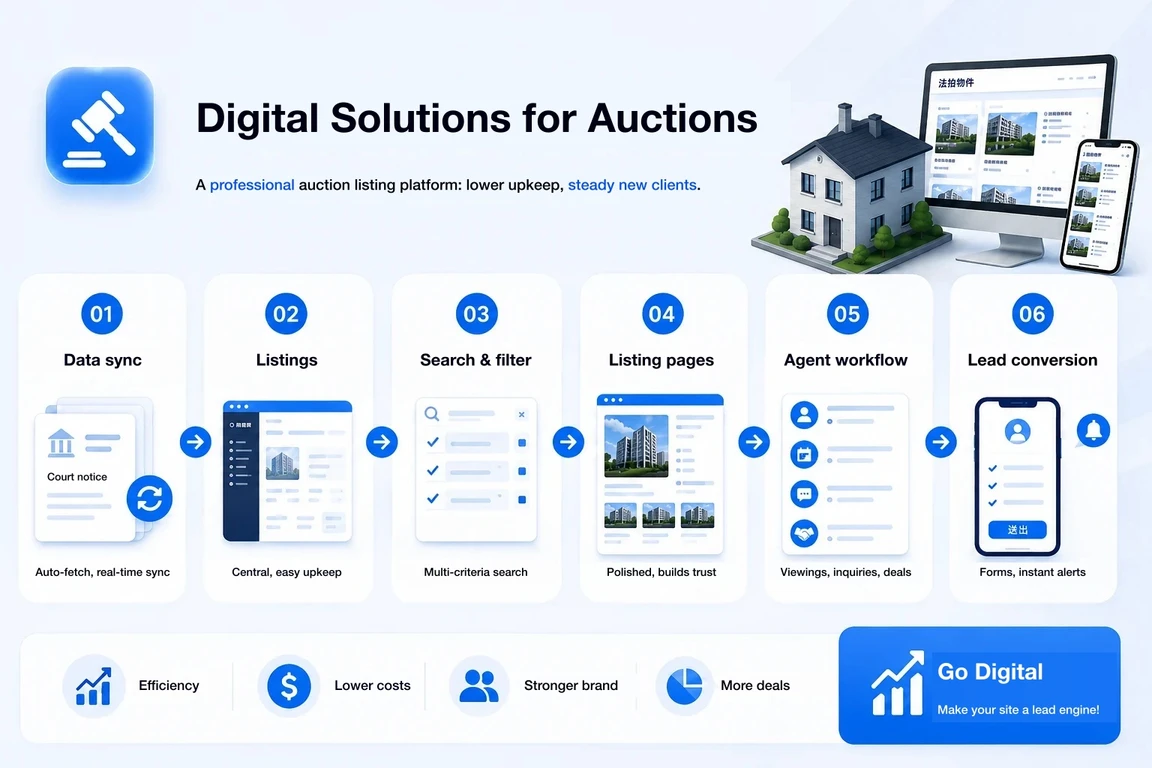
A court-auction firm wins by more than having today's list. The work is sorting it, showing it, and being trusted enough that someone asks you to bid for them. A platform built for that work joins the listings, the brand, and the mandate into one way of getting clients.
Someone spends the day copying listings
The list changes daily. Collecting, sorting, classifying, and publishing it takes hours, and a hand-kept sheet misses rows or goes stale.
No brand of your own, so trust stays thin
Many firms live on Facebook and LINE. Without a site that looks like a practice, a first-time client has less reason to trust you with a bid.
Plenty of properties. No search traffic.
A long list does not help if nobody can search their way to the property or the firm. The unpaid visits never start.
They want you to bid. There is no way to ask.
Interest dies in a phone call or a LINE chat. There is no mandate path and no structured way to collect what you need to follow up.
Mandates, scattered
Clients, mandates, and the follow-up live across LINE, a spreadsheet, and whatever else is open. Progress is unclear, and a lead gets dropped.
A brochure site cannot keep earning clients
If the site only introduces the firm, and the listings are not kept current, search, trust, and new mandates have nothing to accumulate on.
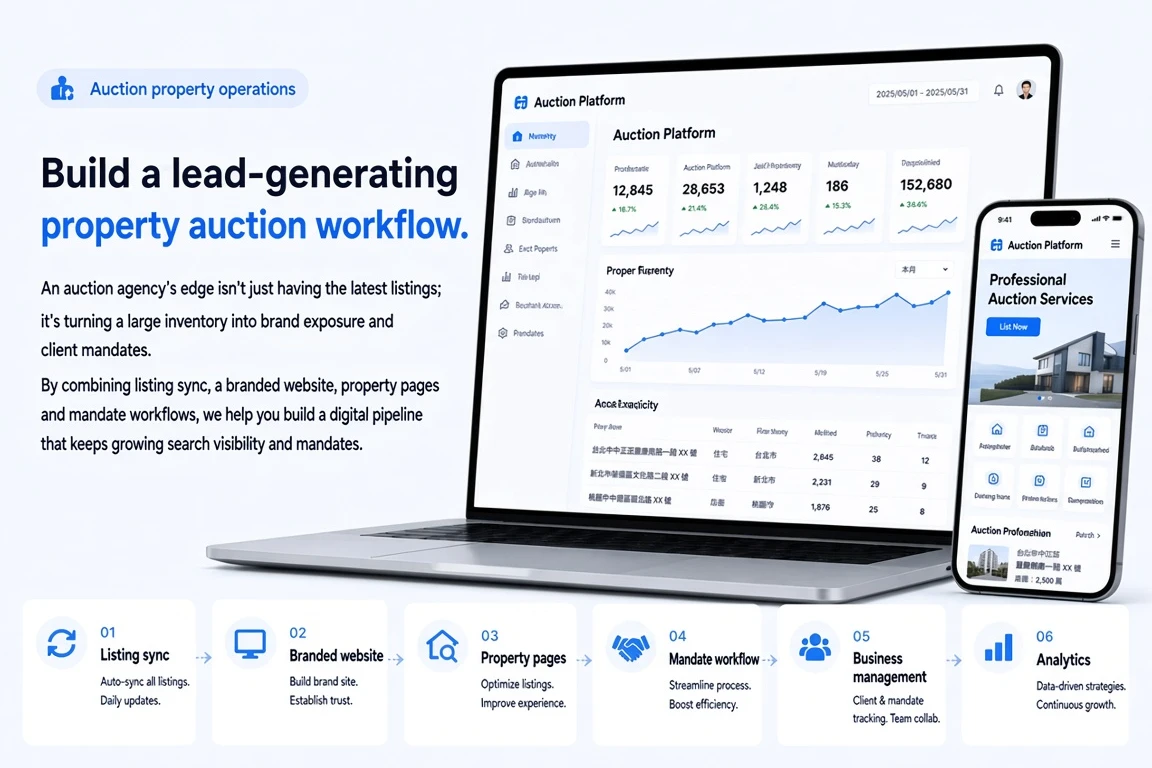
The advantage is not only a fresh list. It is turning a large set of properties into attention, and into someone asking you to act. Synced listings, a brand site, property pages, and a mandate path, so search exposure and new clients can accumulate.
Phase 1
Court, round, reserve, address, and the property itself, brought in across Taiwan and kept current. Less of the day spent retyping the list.
Phase 2
By city, court, round, and type. A buyer finds the case they came for, and the site looks like a practice rather than a dump of rows.
Phase 3
Who you are, work you have done, how a mandate proceeds, and the people behind it. Trust is what turns a browser into someone who writes.
Phase 4
A path to request representation on the listing they are looking at, and a way to leave how to reach them. The interesting case does not depend on a phone tag.
Phase 5
The mandate and the sales work in one place. Assign it, see where it is, and keep the conversation. Fewer leads vanish between tools.
Phase 6
Listings stay current, search has something to accumulate, and the mandate path keeps being improved. The site is a source of work, not a gallery.
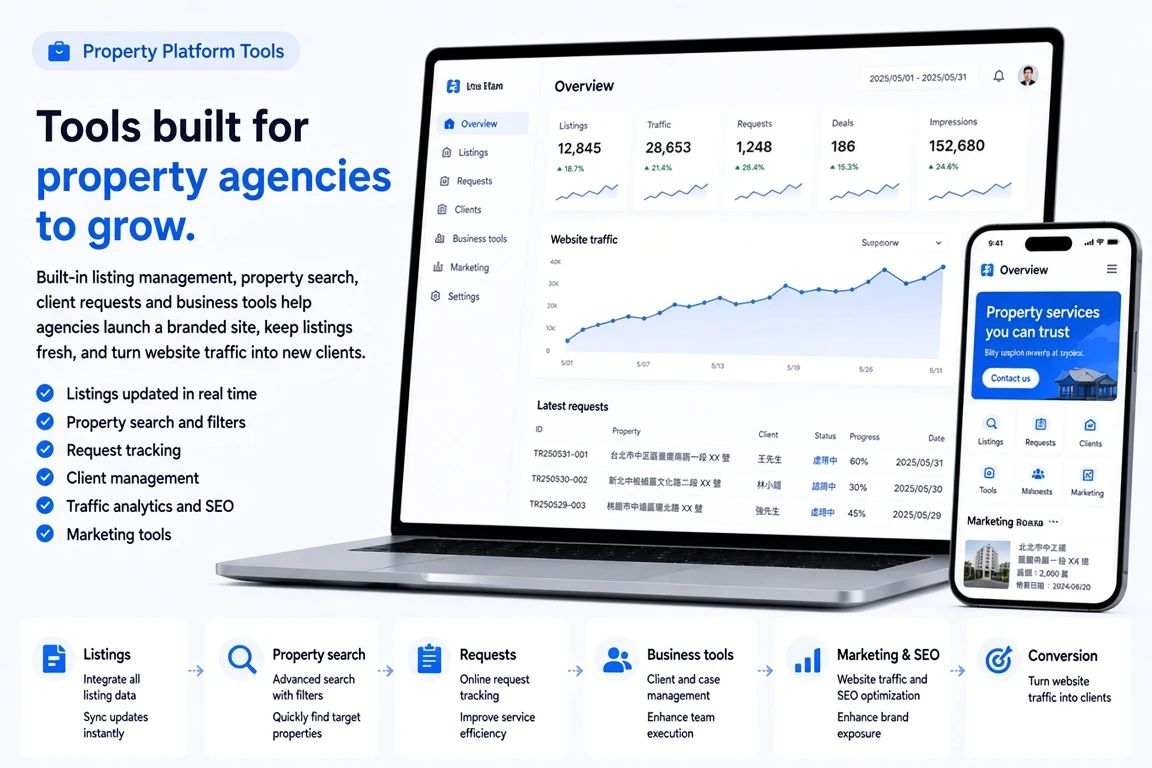
Listing management, search, mandates, and the follow-up. A firm can stand up a branded platform, keep the listings current, and turn more of the visit into a request to bid on their behalf.
The listings, under control
・Listings, synced ・Property pages ・Search
From interest to a mandate
・A request to bid on their behalf ・The follow-up, in the same system
The brand, found
・SEO ・A site that is the firm, not a listing dump

A monthly look at what is coming in
Visits, which properties draw people, mandates, and the market. The next change follows the numbers and the firm's goals.

Search, kept in shape
Property pages, area pages, the brand, and the structure. More of the people who search can land on the firm and on a listing, without you buying every click.

Listings and the platform, kept current
The data, the pages, the brand, and the features. The firm stays on clients, cases, and business development. The site does not go stale behind them.
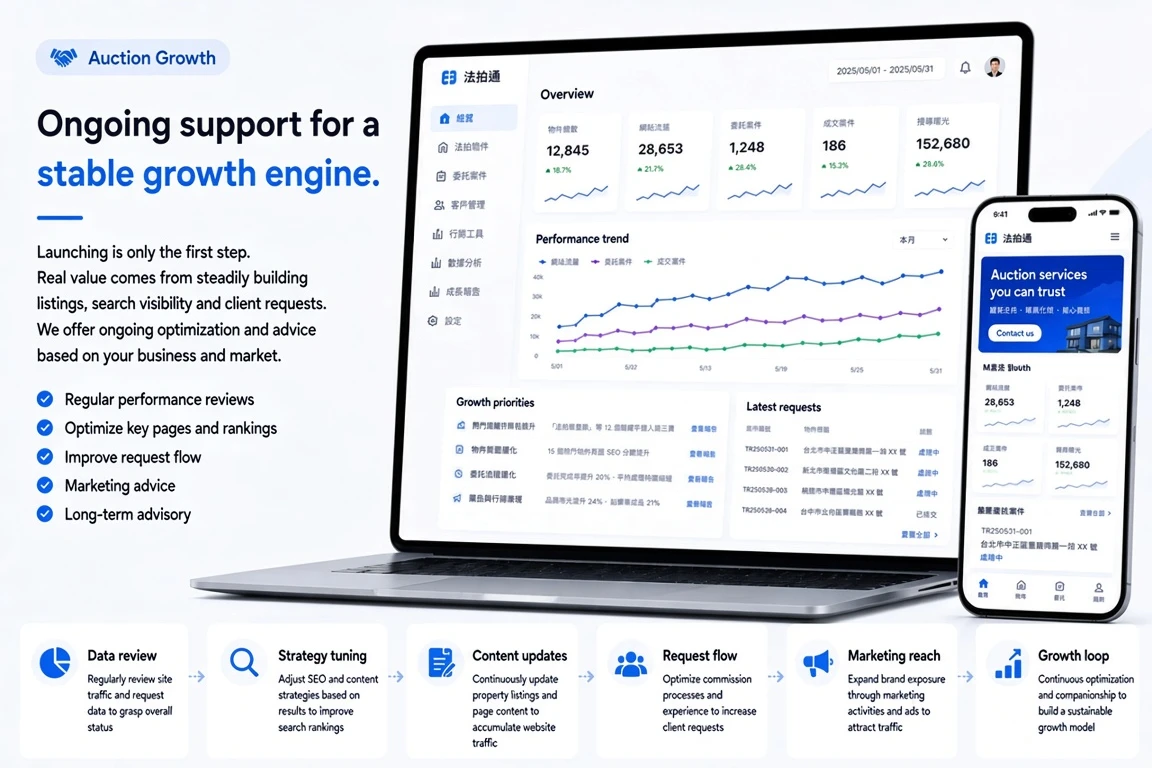
・A court-auction platform in your own brand ・Taiwan listings, synced and managed ・A site structure that can keep earning search ・Mandates and clients, in one place ・A platform you can keep operating as the brand grows
Court-auction bidding firms, property advisors, and anyone whose work is this market. A new brand or a site that already exists and needs to bring in more mandates. The platform is shaped to the firm.
Daily. Court, round, reserve, the auction date, and the property record come in with the sync, so less of the day is spent retyping what the courts already published.
Yes. Each system is a brand site: your name, your domain, your logo, your contact details, and a design that belongs to the firm.
Each listing can take a mandate. They leave what they want and how to reach them. A record is created, and the follow-up continues from there.
Yes. LINE Official Account, CRM, and other APIs can be connected. Features that match how the firm already works can be scoped rather than forced into a generic flow.
A listings site lets people look. This is for the firm: your brand, the synced data, search, a mandate on the property, follow-up, and search that can accumulate. The point is a stream of mandates, not a public database with your logo on it.
Not always. If the current site can still be extended, we look at joining it. If it cannot sync listings, search them, and take a mandate, a platform built for this work is the cleaner path. The brand stays. The operation gets a system that can keep up.