

圖示
Listings sync themselves
Public auction records are pulled in, cleaned up, and published. Less time spent copying cases by hand.
・Property・Web development, Custom work・Platform
Public court-auction records land on the site on their own, reshaped so a person can search them, beside the firm’s own services.
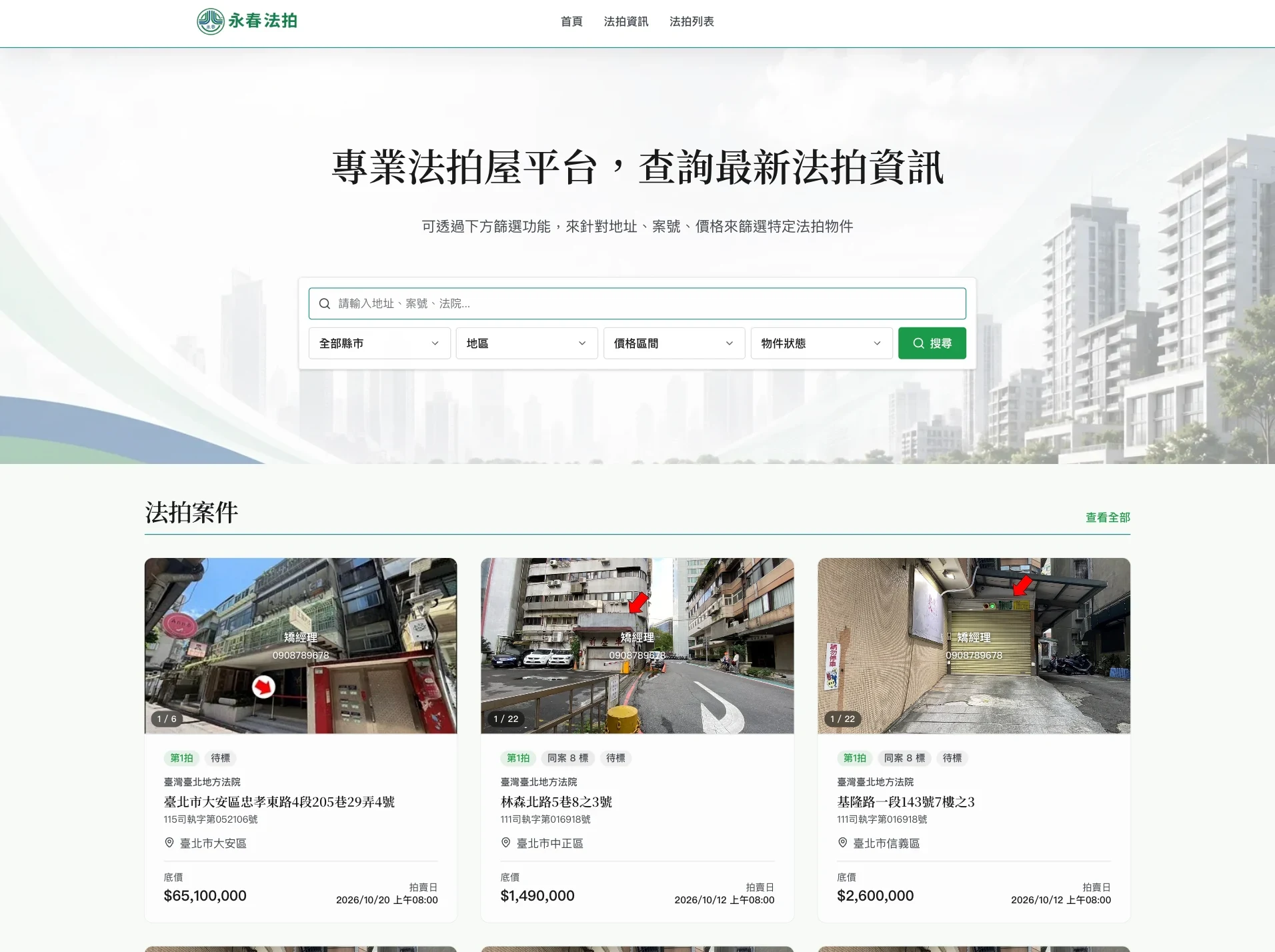
What we delivered
Listings sync themselves
Public auction records are pulled in, cleaned up, and published. Less time spent copying cases by hand.
Background
The challenge
Public data, always moving
Cases are numerous and they change. Copying them by hand does not stay current.
What we did

Public cases are fetched, cleaned, and refreshed on a schedule. The catalog does not depend on someone pasting rows.

Area, price, and the filters a visitor actually uses, instead of a government table.

Auction facts, price, and the case itself, on one page. The visitor should not have to reassemble the public file.

Listing search sits next to the services and the explainers, so they can keep publishing on a platform that is theirs.
The design, in practice


Start a project
Tell us what you need. We start with the goal, then find an approach that fits.
Search the way a buyer looks
The listing is reshaped so someone can filter for what they care about and open the case.
Their own auction platform
Listings, pages, and the firm’s services sit in one place. The site is the front door, not a stack of case files.
The raw record is not how a buyer thinks
A public case file is not area, price, and what is actually for sale. The site had to answer those questions instead.
A listing is not yet a client
Search has to lead into the firm’s actual service, or the platform is just another directory.