
圖示
Traffic, and nothing to show for it
People come every day and leave no name, no inquiry, no order. The shortage is usually not visits. It is a path that never asks for the sale.
Inquiries, orders, and member accounts in one flow, so a quote does not die in an inbox.
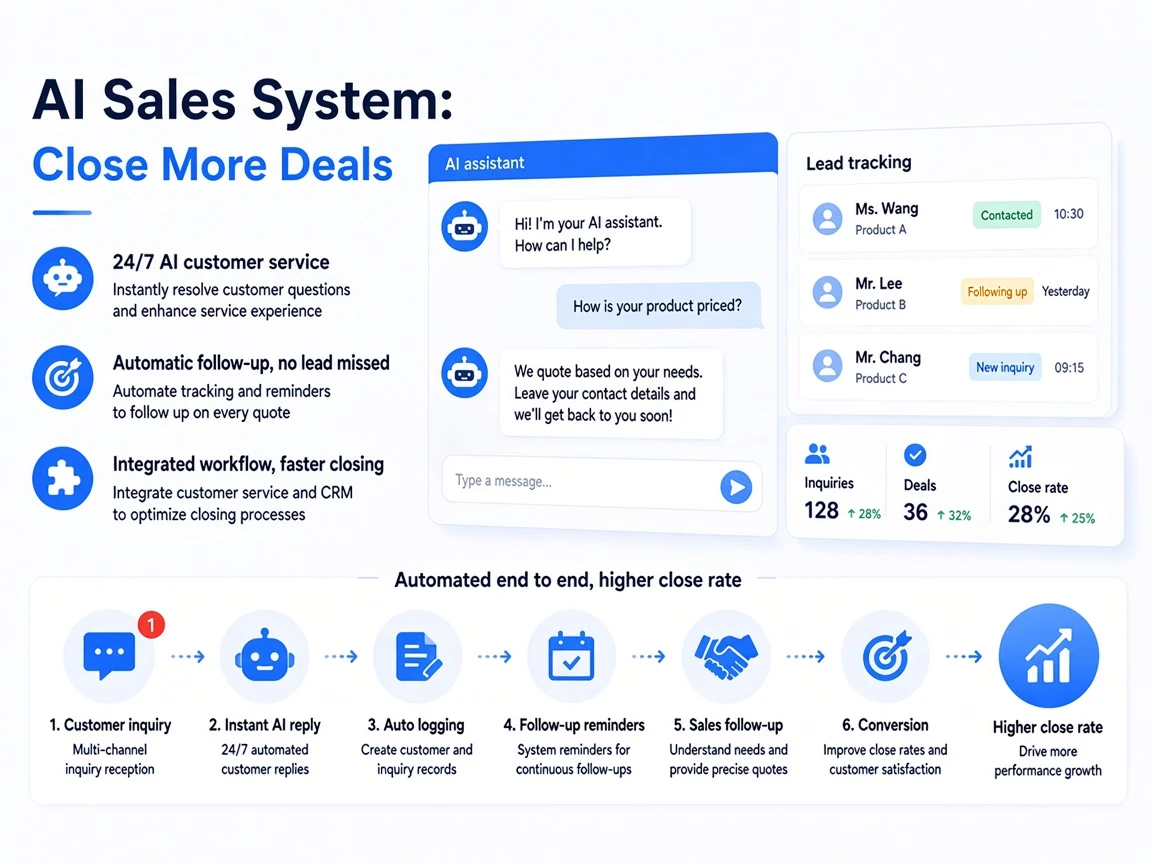
A site can bring people in, and SEO can bring exposure. Revenue still depends on whether each visitor asks, orders, and comes back. We find the stalls in that path, and use AI, automation, and the numbers to raise how many of those visits become business.
Traffic, and nothing to show for it
People come every day and leave no name, no inquiry, no order. The shortage is usually not visits. It is a path that never asks for the sale.
They asked. Then nothing.
Someone asked about the product and never heard back in time, or the next step was unclear. The sale ended in the gap.
They cannot tell what to choose
Specs are dense, the price is opaque, the facts are thin. The decision stalls, and they leave, often for a competitor who made it simpler.
The same jobs, every day
The same answers, hand-written quotes, orders typed in, payment reminders. Hours go in. The operation does not get faster.
You do not know which step loses them
There are visits and there are inquiries. Whether they drop on the product page, the form, the cart, or payment is a blank, so the close rate cannot be repaired on purpose.
No numbers, no next decision
If you cannot see where inquiries come from, what closes, which products move, or how people behave, the next operating decision is a guess.
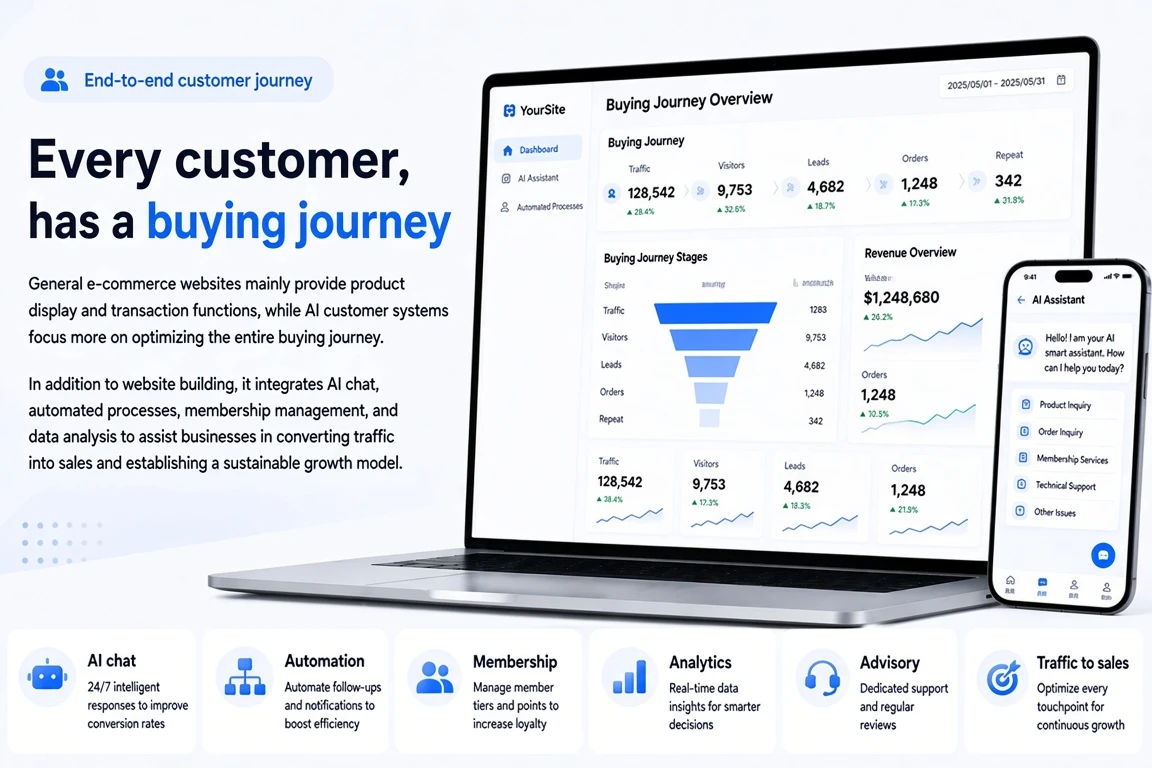
From the first impression to the product, the quote, the order, and the next order, any step can lose the sale. AI, automation, and the tools around them shorten the drop-off, so a visit is worth more than a pageview.
Phase 1
The brand site, the product, the work you have already done, and writing that shows you know the field. A first impression that makes the next click reasonable.
Phase 2
Specs, options, a price they can try, proof, and the questions people always ask. Less hesitation caused by missing facts.
Phase 3
A chat, reviews, the work, and the facts about the company, answering while the question is still warm.
Phase 4
Options, a price assembled from those options, members, payment, shipping, and the order. The quote or the checkout does not stall on a person.
Phase 5
LINE, email, automatic notices, and a member relationship. The next order has a path, not a hope.
Phase 6
Source, inquiries, close rate, and what people actually do. The stalls get named, and the site keeps improving as the company grows.
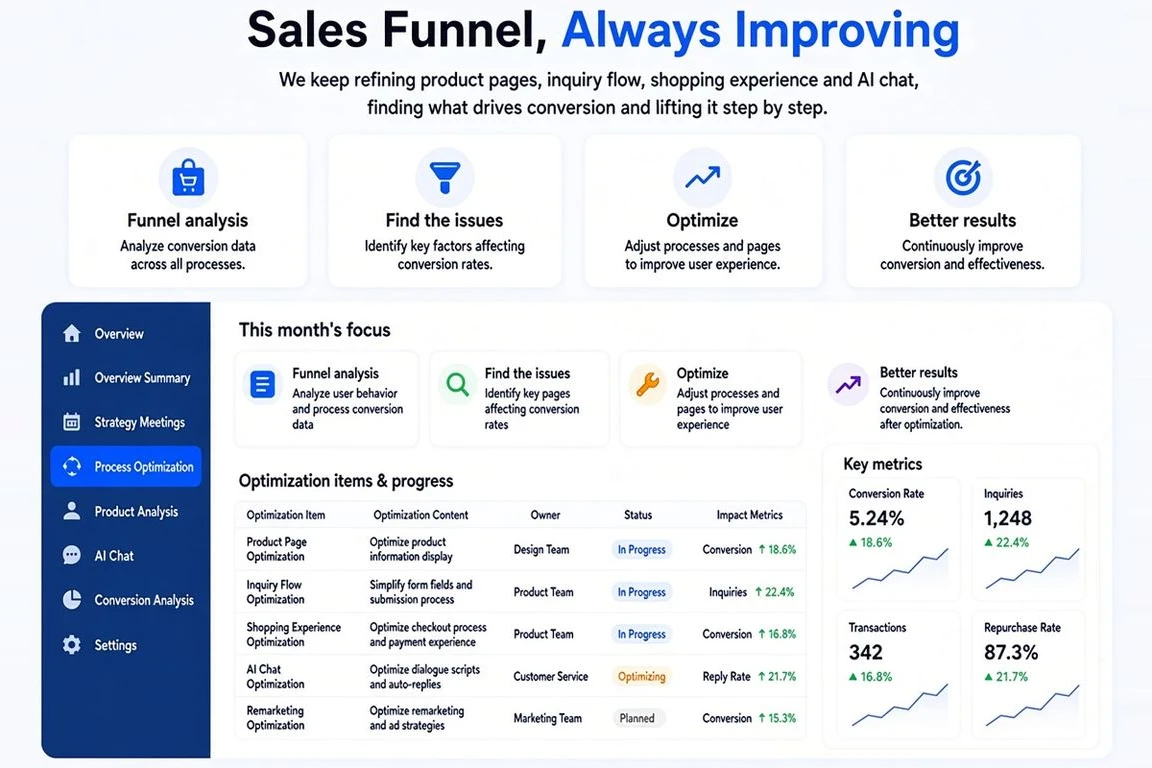
The system includes the catalog, the options, a price that calculates itself, a chat, and the order. Less of the sale is typed by hand. The buyer has a smoother way through.
Find the product without a scavenger hunt
Categories, search, filters, and sort. Less time hunting, more of the visit spent on a product that might actually be bought.
Options that price themselves
Size, material, and process change the price as the buyer configures. The quote is not an email you wait on.
A chat that can start the inquiry
Common questions, answered at any hour. It can explain a product, suggest one, and point at the inquiry. The inbox gets less of the repetitive work.
Payment, shipping, and the order, in one place
Members, payment, shipping, e-invoices, and the order. From checkout to dispatch, the buyer does not leave the site to finish.
Members, offers, and a reason to return
Tiers, coupons, codes, a return offer, and notices. The customers you already have are a program, not a list you forget.
The operation, and what AI reads in it
Visits, inquiries, close rate, what sells, and the rest of the operating picture. AI points at the change most likely to raise how many visits become orders.

A monthly look at the operation
Close data, behavior, and the market. The next round of changes has a direction before anyone starts editing.

The path to a sale, kept in shape
Product pages, the inquiry, the cart, and the chat. The step that loses people gets found, and the close rate moves because of that, not because of a redesign for its own sake.

Catalog and site, kept current
Products, categories, specs, campaigns, and the words on the site. The company stays on the product and the sales. The pages do not go stale in the meantime.
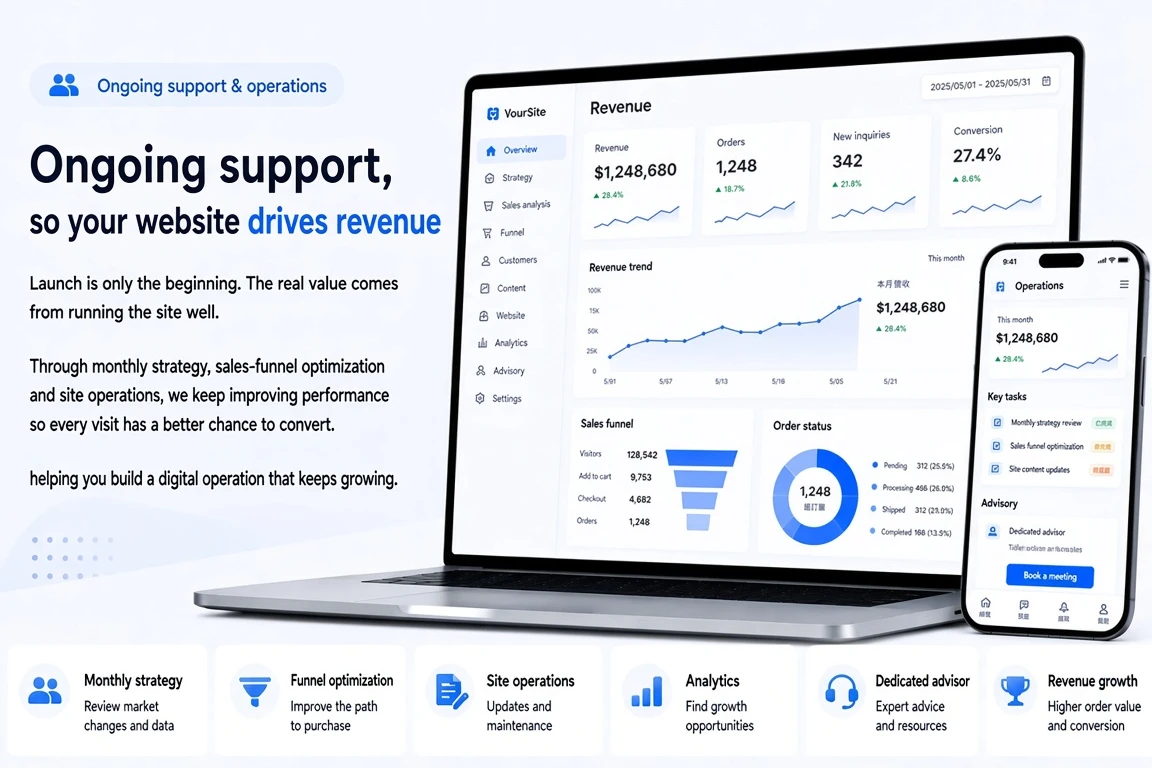
・A site built to raise the close rate, and keep raising it ・Inquiries, signups, bookings, and orders on one path ・A chat and a way to hold the people who are not ready yet ・Conversion and the numbers, reviewed on purpose ・Room to add commerce, members, and payment when you need them
A store shows products and takes payment. This is aimed at the whole path to a sale: the chat, the automation, members, the operating numbers, and someone still looking at the results with you. Traffic, the inquiry, and the order are one system you can keep improving.
Often, yes. We look at the structure, the features, and how orders actually move, then say whether it can be extended or whether a TimTech store is the cleaner start. Either way, the goal is a path that can close.
Companies that want more of their visits to become orders, a cleaner way to take the work, or an operation that lives online. B2B, B2C, and made-to-order all fit, as long as there is a catalog, an inquiry, members, or a checkout to improve. The shape follows the size of the business.
You can, or TimTech can run it with you. Product uploads, upkeep, the sales path, AI automation, and operating advice are available as the work requires. The point is that the site keeps earning its keep.
Yes. Payment, shipping, e-invoices, LINE Official Account, CRM, ERP, and other APIs can be connected where the business needs them. Unusual cases are scoped as an integration, not waved through.
No. Launch is the start. Buyers, the market, and the way you sell keep changing. The numbers, the path, and a monthly look at the operation are how the close rate keeps moving.