圖示
The site is finished. The inquiries are not.
Visibility that compounds, in Google and in AI answers, and turns into real conversations.
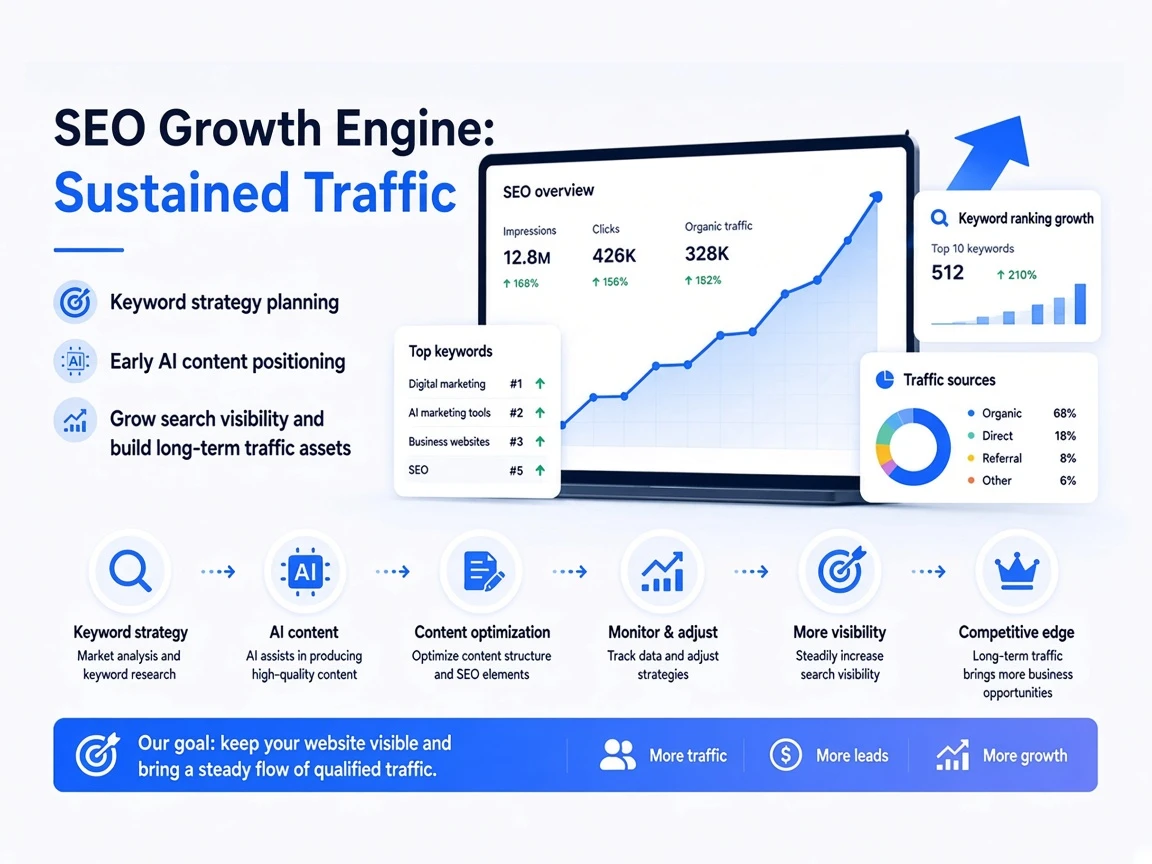
The site is careful and full of information, and the visits still do not come. The hard part is knowing which problem is the real one.
The site is finished. The inquiries are not.
Turn the ads off, and the visits stop
You do not know what buyers type
Competitors keep the spots above you
The writing takes time. Nobody reads it.
You cannot tell which queries bring real buyers
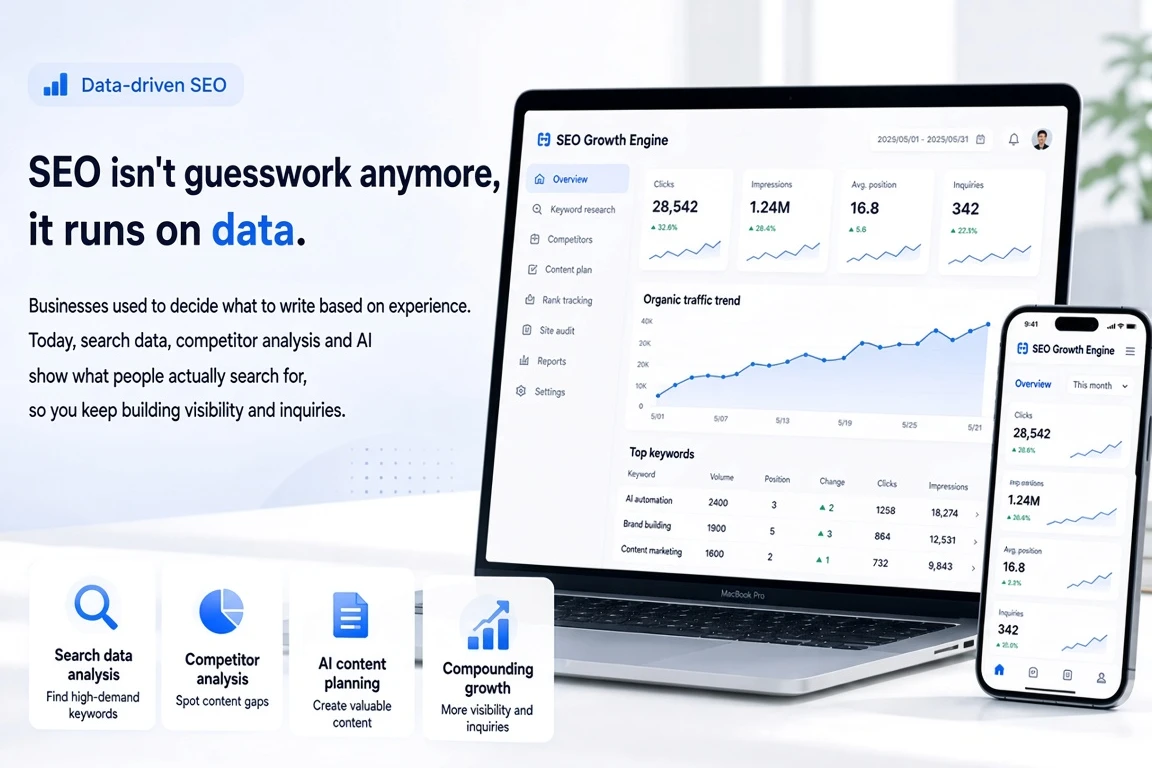
Companies used to decide what to publish from experience. The pages that keep earning visits are planned from search data, from what competitors already cover, and from AI that can see both. That is how exposure and inquiries accumulate.
Phase 1
Demand, commercial value, and whether there is a realistic opening. The next piece of writing has a direction before anyone drafts it.
Phase 2
Their keywords, the pages that perform, and where the market still has a gap. The strategy is built from that, not from a slogan.
Phase 3
Search data and AI sort queries into groups, topics, and a site structure you can keep extending.
Phase 4
Articles and pages that match the intent behind the query, published on purpose, so authority and unpaid visibility can accumulate.
Phase 5
Rank, impressions, clicks, and visits, watched per piece of content. Later changes are based on what the pages actually did.
Phase 6
The plan, the keyword map, and the quality of the site get adjusted from the data. SEO is an asset that compounds, not a project with an end date.
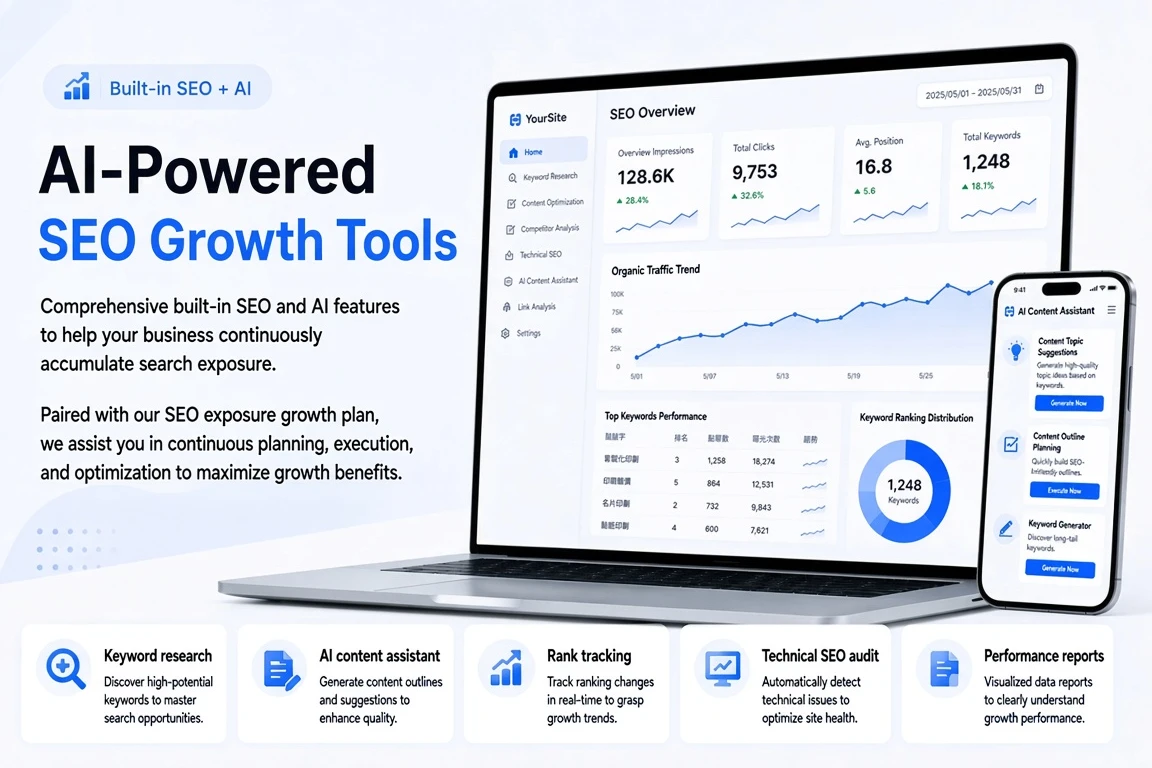
The site already includes SEO and AI, so the ability to accumulate search exposure is built in. With the search-growth plan, we keep planning, publishing, and adjusting, so that ability is actually used.
Keyword strategy, read by AI
Demand, volume, and how hard the fight is. High-potential queries surface quickly, and the SEO plan is built from them.
Drafts that start from the query
From a keyword, AI lays out the structure, the title, and the direction, so a page that matches the search can be drafted faster.
Competitors, compared
Their keyword map, their content, their search performance. The opening you can still take becomes a different page, not a copy.
An SEO health check
Basics, content quality, and technical issues, checked automatically. What is holding the rank back is named, with a suggestion for what to change.
A board for the results
Rank, impressions, clicks, and visits, current enough that the next optimization is a decision, not a guess.
An SEO advisor that stays on
Suggestions, content fixes, and reminders, as the site runs. Search performance is something you keep improving, not a report you file.

A monthly strategy meeting
What the site did, and what the market did. The SEO plan moves with the company's goals and with the search data, so the topics stay aligned with demand.

Topics, then the writing
Themes with commercial value, chosen from demand, competitor gaps, and AI. Pages that match search intent keep being published, and the exposure has time to compound.

Keep adjusting, and keep score
Rank, impressions, clicks, and visits stay under watch. Content and keywords change from the numbers. The work does not stop after one round.
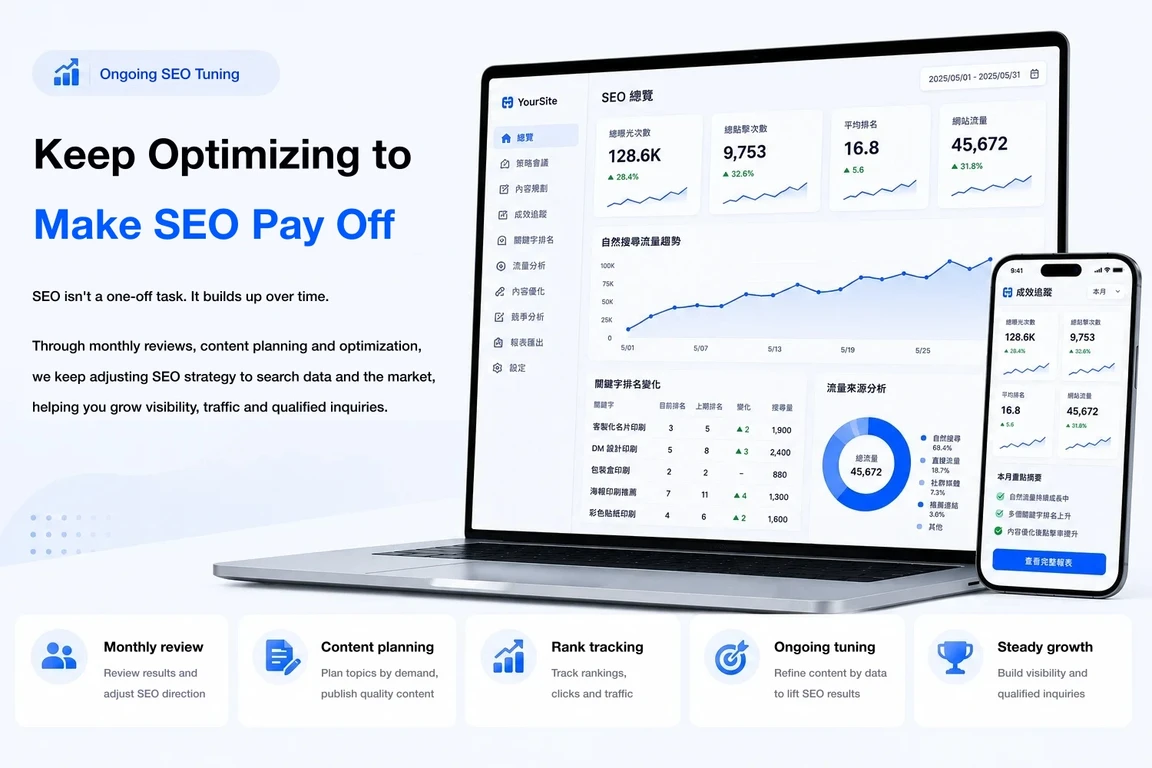
・A base that can keep earning unpaid visits ・Pages written for what people actually search ・A way to watch results and change course ・Keyword and topic planning, with AI in the loop ・A source of attention, and of people who might buy
It is a long game. A visible shift often takes three to six months, and it still depends on the site you start with, how crowded the industry is, and how hard the queries are. Monthly meetings and the tracking keep the direction honest, so exposure can accumulate instead of spiking once.
AI search did not retire SEO. It changed how answers are shown. Google, ChatGPT, Gemini, and the rest still cite pages that are specific and credible. A real SEO program raises the chance of ranking, and the chance of being the page an AI answer points at.
Yes. We look at structure, content, and the SEO basics first, then set a plan that fits. On the TimTech platform, the built-in AI SEO tools can sit alongside that work.
Both. AI handles the search analysis, the outline, and a first draft. A consultant then checks it against the industry, the brand, and the SEO plan. Quality, rankings, and whether it still sounds like the company are all in scope.
The site and the system stay yours. Content, the strategy, and the optimizations delivered during the plan follow the agreement you signed. If you do not renew, ongoing optimization and new pages stop. Where TimTech supplied pages that were specific to the plan, use of that copy follows the contract.
Not a large share. A monthly meeting sets the goal and the direction. Keyword research, outlines, writing, tracking, and the adjustments are TimTech's work. What we need from you is the industry knowledge we cannot invent.
