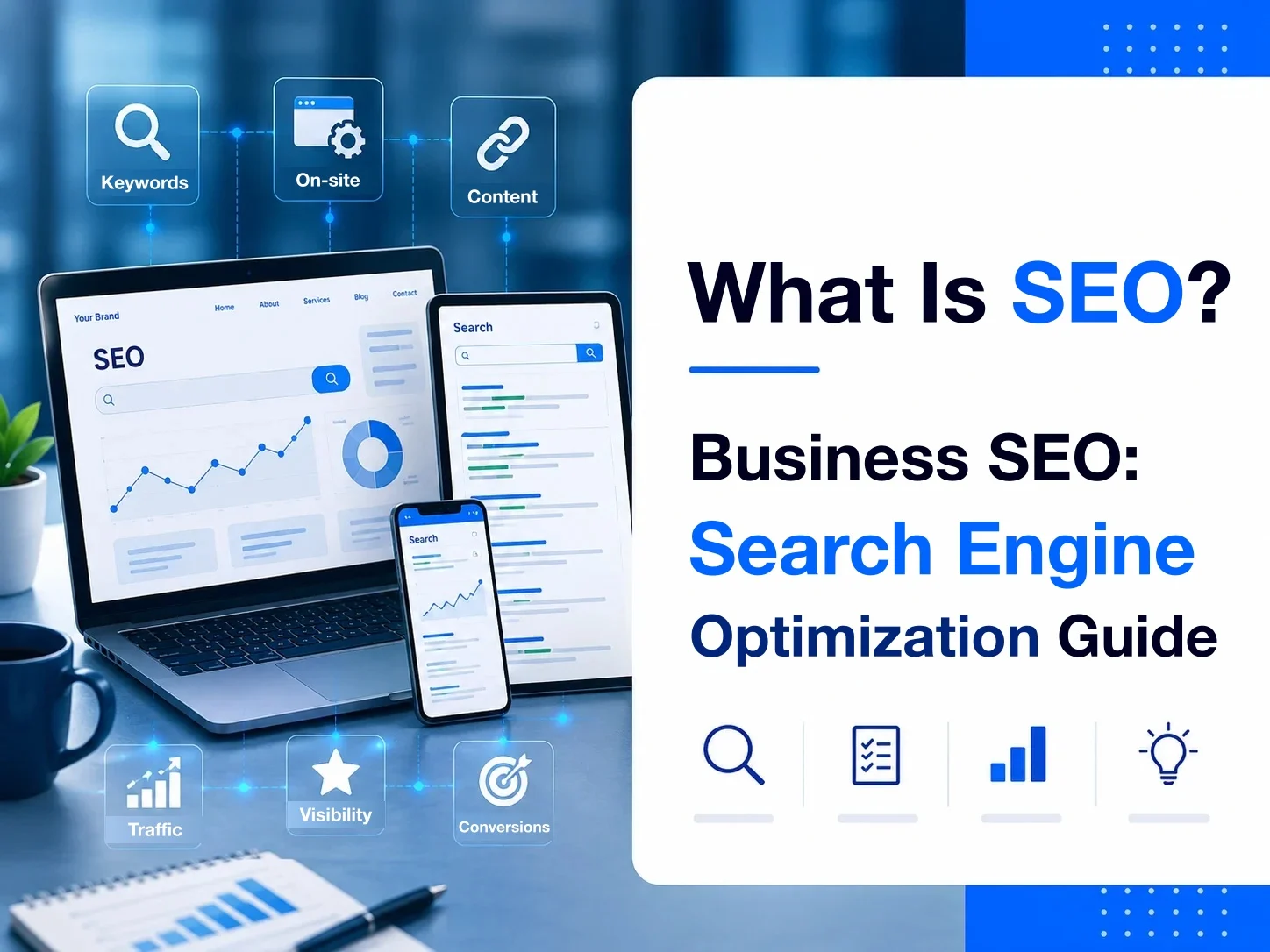
When businesses start running a website and doing digital marketing, they often come across one term: SEO.
SEO stands for Search Engine Optimization. Its main purpose is to make website content easier for search engines to discover and understand, so it has a chance to gain visibility in relevant search results.
But SEO isn't just about "getting a keyword onto Google's first page."
What really matters is whether a business can be found while potential customers are searching for a problem, product, service, or solution.
For example, if a business provides precision machining services, potential customers might search for:
- CNC precision machining
- Precision parts machining shop
- Semiconductor parts machining
- Best CNC machining shops
For another company that provides business website services, potential customers might search for:
- Website development
- Website development cost
- Web design company
- How to build a business website
Behind these searches, users are usually looking for information, comparing options, or even getting ready to find a vendor.
SEO helps a business build the right website structure and content for these real search needs, increasing its chances of being discovered by potential customers.
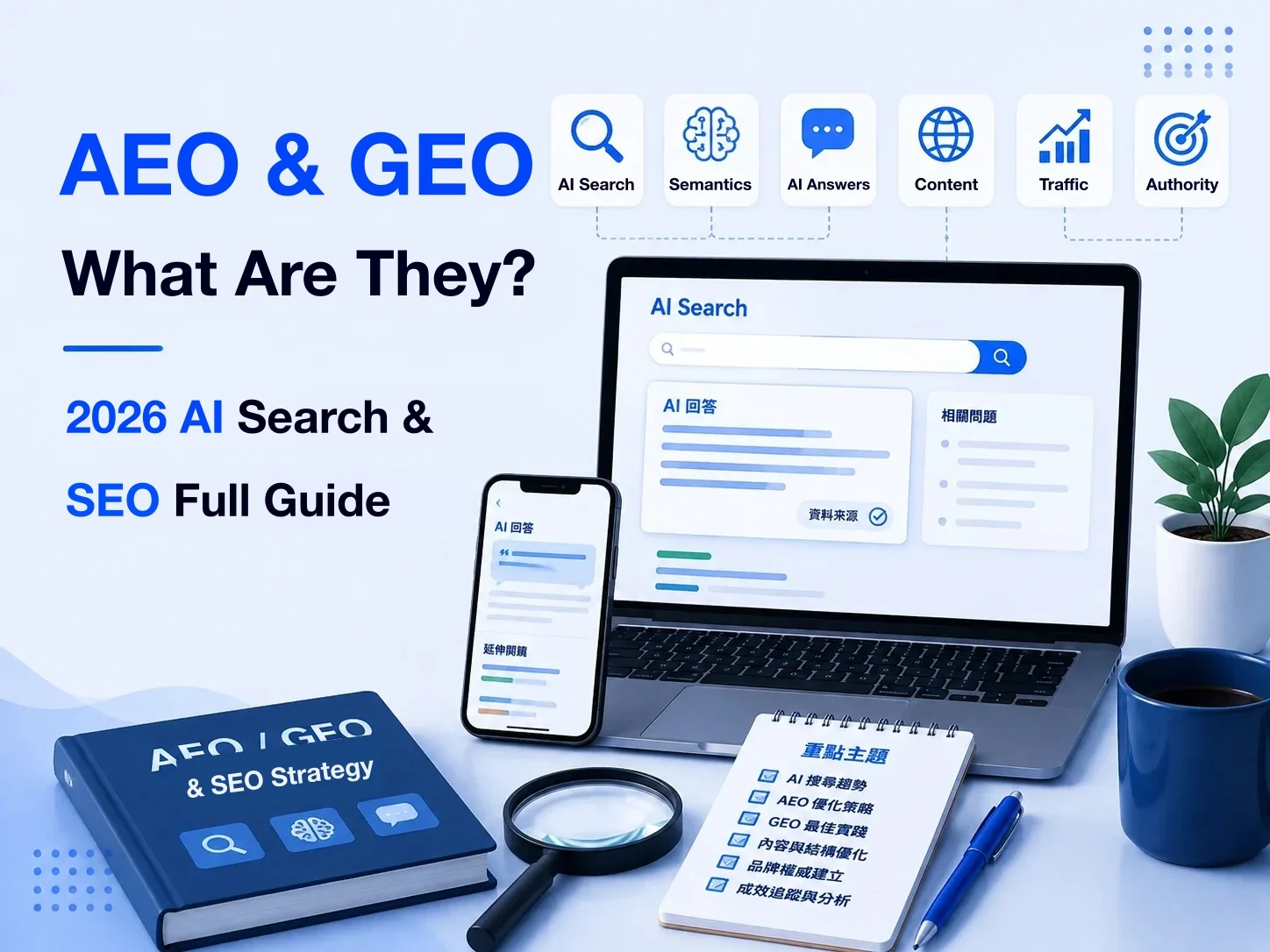
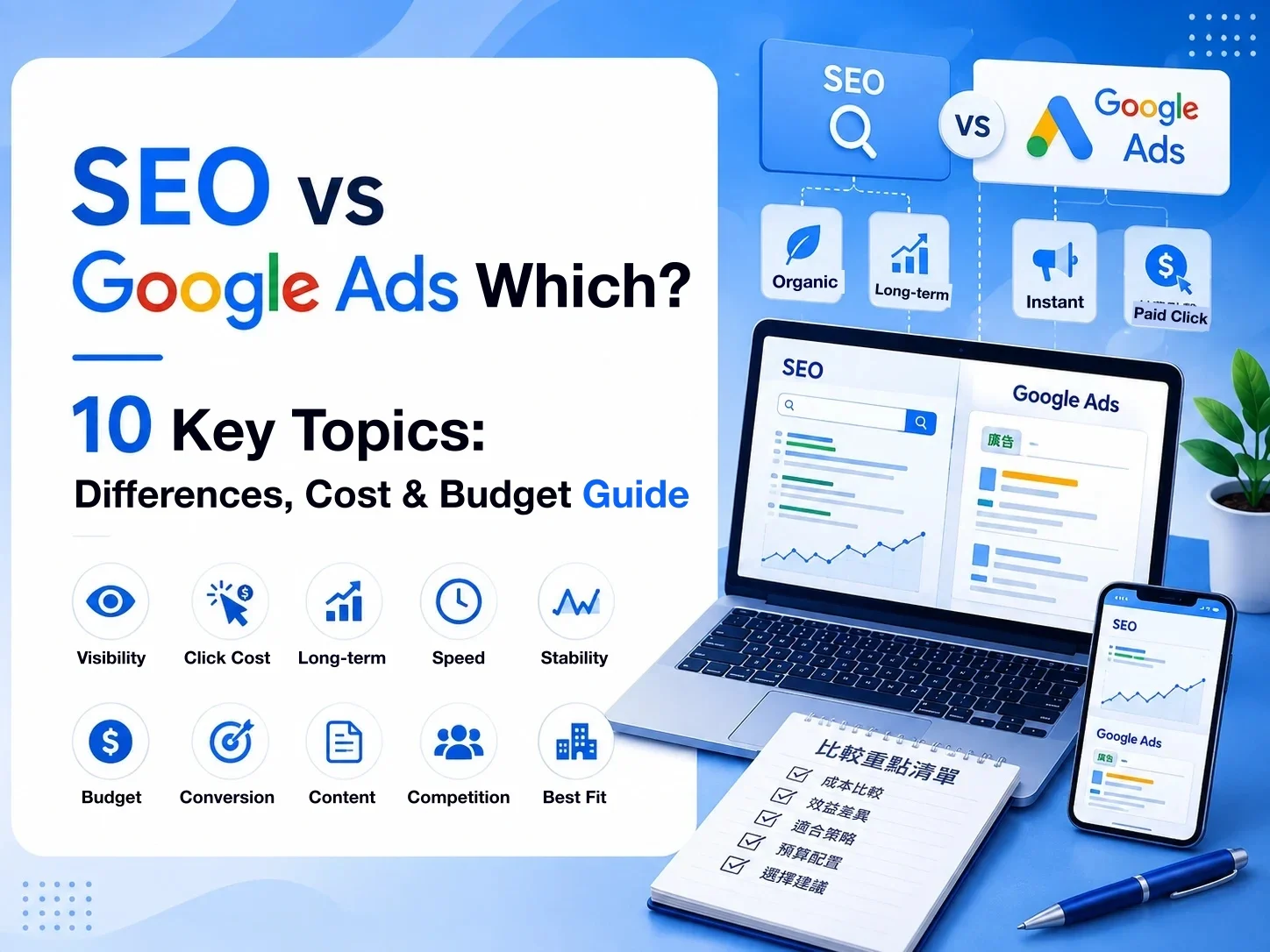
Further reading:SEO vs Google Ads: Which Should You Choose?
SEO isn't just about traffic; it builds a search entry point for your business
Getting more traffic to a website doesn't necessarily mean SEO is working.
If a company providing B2B services gets lots of visitors every month, but those visitors aren't the customers the business actually wants to serve, the commercial value of that traffic is still limited.
So what matters more in business SEO is:
being found by the right potential customers, for the right search needs.
For example:
When users first start researching a problem, they can get to know the business through expert articles.
When they start comparing different solutions, they can learn more about the business's capabilities through service pages, product information, and case studies.
When they're ready to find a vendor, they can request a quote, make a booking, or get in touch through the website.
So SEO isn't just about earning search rankings, but about building a:
Search need → Discover the business → Understand its expertise → Build trust → Create business opportunities
long-term path for winning customers.
And as Google Search and AI search keep evolving, the way search results present information is also changing.
What businesses need to think about is no longer just "how to get a blue search link," but how to create clear, credible, genuinely valuable information so search systems can understand what the business offers and which content is worth showing to users.
That's why SEO is better seen as a long-term investment in digital assets than as a one-off ranking project.
This article starts with the basic principles of SEO, then covers keywords, content SEO, technical SEO, website authority, the execution process, and performance measurement, as well as how businesses should rethink SEO now that AI search has arrived, to help businesses build a more complete search visibility strategy.
Further reading:The Complete Guide to Business Website Design
Key takeaways
If you just want a quick overview of SEO, start with these key points:
- SEO (Search Engine Optimization) uses website structure, content, and technical optimization to make it easier for search engines to discover and understand a website, increasing a business's chances of being found for relevant search needs.
- SEO isn't just about chasing keyword rankings. The real goal is to help the right potential customers find the business when they search for related problems, products, or solutions.
- SEO can be divided into four main areas: search needs and keywords, content SEO, technical SEO, and website authority and trust. They need to work together; writing articles alone isn't enough.
- Business SEO can follow this process: Business goals → Customer needs → Keyword research → Topic Cluster → Content creation → Technical optimization → Internal and external links → Data tracking → Continuous improvement.
- Keywords shouldn't be judged by search volume alone; you should also evaluate search intent, commercial value, relevance to the business's services, and competitive opportunity.
- SEO has no fixed timeline for results, and "guaranteed first-page rankings within a few months" shouldn't be promised. Businesses can track progress step by step: Indexing → Impressions → Clicks → Traffic → Conversions → Qualified leads.
- SEO and Google Ads aren't an either-or choice. Google Ads is good for getting traffic quickly and testing the market, while SEO is good for building search visibility and content assets over the long term, and the two can work together.
- AI Overviews, AI Mode, and generative search are changing the search experience, but the basic principles of SEO still matter. Businesses should first build a solid SEO foundation, then gradually expand into AI search, AEO, and GEO.
- In the end, SEO shouldn't be judged only by rankings and traffic, but by this: whether search visibility attracts the right customers and goes on to produce inquiries, qualified leads, and real business results.
- SEO is better seen as a long-term investment in winning customers through search and building digital assets, not a one-off keyword ranking project.
What is SEO?
SEO is short for Search Engine Optimization. It refers to using website structure, content, technical work, and other optimizations to make it easier for search engines to discover and understand website content, and to increase the chances that users find the website in relevant search results.
For example, a business that provides CNC precision machining services wants its products, services, or related expert content to have a chance of appearing in search results when potential customers search for "CNC precision machining"or"precision parts machining shop".
This is one of the core problems SEO aims to solve:
giving a business the chance to be found when users are searching for information related to it.
Google's SEO Starter Guide also describes SEO as a set of work that helps search engines understand content and helps users find a website through search.
Further resources: Google Search Central — SEO Starter Guide
How does SEO affect search results?
A search engine first needs to find website content before it can understand it and show it in search results.
Simplified, you can think of the process as:
Discover content → Crawl content → Index it → Understand the search need → Show search results
For example, a business publishes an article:
"What Is CNC Precision Machining?"
Google first needs to discover this page and read its content, then judge:
- What is this page mainly about?
- Can this page be indexed?
- Which searches might be relevant to this content?
- Is this page worth showing to searchers?
Only then, when users later search for related questions, can the search system include this page in the results.
So SEO isn't about directly "setting rankings" on the search results page.
What a business can actually do is:
build a website and content that search engines can access and understand, and that are valuable to users.
Further resources:How Google Search works
SEO isn't the same as keyword rankings
Keyword rankings are one of the metrics to watch in SEO, but they aren't all of SEO.
For example, a business successfully gets:
"website development"
near the top of the search results, which may indeed bring in a lot of traffic.
But if:
- The website content doesn't match the search need
- The visitors aren't the business's real target customers
- The services aren't explained clearly
- There are no case studies
- There's no clear next step
then even good rankings may not produce business results.
So business SEO should consider all of:
Search visibility → Qualified traffic → Content understanding → Building trust → Business conversion
rather than stopping at "what position does this keyword rank in."
SEO also isn't about stuffing articles with keywords
Another common misconception is that SEO means repeatedly adding the target keyword to an article.
For example, if you want to rank for "website development," you repeat these over and over in the article:
"website development," "website development company," "website development recommendations," "website development services."
That isn't a good content strategy.
The real purpose of keyword research is to help businesses understand:
what users are searching for, and what information they really want.
Once you know the search need, you can create content that genuinely answers those questions.
So rather than counting how many times a keyword appears, what matters more is:
- Whether it genuinely answers the searcher's question
- Whether the content is complete and easy to understand
- Whether it includes the business's own experience and information
- Whether the page topic is clear
- Whether it helps users take the next step
SEO is ongoing, cumulative work
SEO also usually isn't something you set up once when the website launches and then you're done.
A business may need to keep working on:
- Search need research
- Keyword research
- Creating website content
- Updating older content
- Optimizing internal links
- Fixing technical issues
- Tracking search performance
- Adjusting the website structure
For example, when a business adds a new product line, it may need to create new product and solution content; when market search needs change, it may also need to rework existing content.
So SEO is closer to an ongoing part of running a website.
So, if you want to understand SEO in one sentence:
SEO makes it easier for search systems to find and understand a business, and show it to the right users, when potential customers search for related needs.
Why do businesses need SEO?

Businesses can win customers through many channels, such as advertising, social media, business development, trade shows, and partners. SEO isn't the only way to win customers.
What makes SEO different is that it mainly serves:
search needs that users have already created on their own.
For example, a corporate buyer looking for a new machining vendor might actively search for:
- CNC machining shop
- Precision parts machining
- Semiconductor parts machining shop
Another business owner preparing to rebuild the company website might search for:
- Website development company
- Website development cost
- Business website design
These users aren't being interrupted by the business; they were already looking for related information or solutions.
If a business can keep showing up in these searches, it has a chance to reach potential customers who didn't know the brand before.
1. Reach potential customers who are actively searching
One of SEO's greatest business values is serving search needs that already exist.
Different search terms can also signal different levels of need.
For example:
- "What is SEO":The user may still be learning the basic concept.
- "How to do SEO":They may have started researching how to carry it out.
- "SEO company recommendations":They may already be at the stage of looking for a vendor.
So businesses can create different content for different search needs, and connect with customers at different stages of their decision.
2. Keep building organic search traffic
Ads usually require paying for impressions or clicks on an ongoing basis.
SEO works differently.
Once a business creates a page that has search demand and long-term value, as long as the content stays competitive and keeps being shown by search engines, it may keep bringing in organic search traffic after publication.
For example, a complete:
If it keeps matching users' search needs, it may still bring in new visitors months or even longer after it's published.
This is also how SEO differs from many short-term marketing campaigns:
content you created in the past can keep serving as a search entry point in the future.
But this doesn't mean SEO is "do it once and it works forever."
Search needs, competitors, content, and search systems all change, so businesses still need to keep updating and optimizing important content.
3. Build the business's expertise and trust
When potential customers search for a problem for the first time, they aren't necessarily ready to buy.
For example, a manufacturing business might first search for:
"What parts is 5-axis CNC machining suitable for?"
If the business website only has:
- A company introduction
- Equipment photos
- Contact us
it's hard to connect with potential customers in this kind of informational search.
But if the business keeps sharing:
- Technical knowledge
- How to choose
- Real case studies
- Frequently asked questions
- Industry experience
the website becomes more than a company introduction page, gradually forming a body of expert content that helps customers make decisions.
Later, when customers actually need to find a supplier, they're also more likely to already know the business to some degree.
4. Support customer decisions at every stage
Business customers usually don't close a deal right after seeing a website.
Especially for B2B services, high-priced products, or complex solutions, customers may go through:
Spot a problem → Search for information → Research options → Compare vendors → Get in touch → Evaluate → Close the deal
SEO can create content for each stage.
For example:
Understanding the problem:"Why does a website need a redesign?"
↓
Researching options:"What website-building platforms are there?"
↓
Assessing the budget:"How much does website development cost?"
↓
Choosing a vendor:"How do you choose a website development company?"
A business doesn't have to compete only for high-commercial-intent keywords at the final step; with thorough content, it can also start connecting with customers at an earlier research stage.
5. Build the business's own digital assets
When running ads, a business is buying traffic and visibility for a specific period.
But what the business creates itself:
- Service pages
- Product information
- Case studies
- Expert articles
- FAQ
- Industry knowledge
stays on its own website.
This content can keep being:
- Discovered by search engines
- Read by customers
- Shared by the sales team
- Cited by other websites
- Linked from future content
So the value of SEO isn't only about how much traffic grows in a given month, but also about the business steadily building its own content and search assets.
6. Turn the website from a "company introduction" into "an ongoing source of customers"
After launch, many business websites still mainly serve this function:
The customer already knows the company → Searches the company name → Visits the website → Looks up information
This kind of website mainly serves existing brand demand.
SEO can go further and let the website serve:
The customer doesn't know the company yet → Searches for their own problem → Discovers the business's content → Gets to know the business
This gradually turns the website from a passive company introduction tool into an entry point for winning customers that actively serves market search demand.
SEO isn't necessarily right for every business, and investing in it doesn't mean results will come right away.
But if a business's customers genuinely use search to research problems, compare options, or find suppliers, then SEO is a customer-winning capability worth building over the long term.
How does SEO work?

To understand SEO, you first need to know how search engines process website content.
Google broadly divides how search works into a few main stages, including:
Crawling → Indexing → Serving Search Results
Put simply, that means:
Find website content → Understand and store the content → Decide which results to show based on the search need
Much of the SEO work a business does actually revolves around this process.
Further resources: Google Search Central — How Google Search Works
1. Crawling: search engines first find website content
A search engine has to discover a page before it has a chance to process it further.
Google uses automated programs, commonly called crawlers, to keep exploring pages on the web.
Search engines may use:
- Internal links on the website
- Links from other websites
- Sitemap
- Known websites and pages
to discover new URLs.
For example, a business publishes a new article:
"The Complete Guide to CNC Precision Machining"
If the website's homepage, article categories, or other related articles all link to this page, it creates clearer relationships across the website and helps search engines discover the content.
So SEO isn't done just because you "published the article."
Website structure and internal links also affect how search engines explore the whole website.
2. Indexing: search engines understand page content
After a search engine finds a page, it still needs to understand it.
For example:
- What is the page's main topic?
- What text and images does it contain?
- How does the page relate to other content?
- Which URL is likely the main version?
- Is the content suitable for the search index?
This process is called Indexing.
So clear:
- Page titles
- Content structure such as H1 and H2
- Body content
- URLs
- Image information
- Canonical
- Structured data
can all help search engines understand a page.
But keep in mind:
Just because Google can find a page doesn't mean it will be indexed.
Google decides whether to include content in its search index based on the page itself and the state of the website.
3. Serving: providing results based on search needs
When a user enters a search term, the search system looks through already-indexed content for suitable results to show.
For example, a user searches for:
"website development cost"
The search system needs to judge which pages best meet this need.
This judgment isn't just about whether the words "website development cost" appear on the page.
Google explains that its search systems consider many factors and signals, such as:
- The search query itself
- Content relevance
- Content quality
- Usability of the website and page
- The user's context
And for different search needs, how much each factor matters may also differ.
So in SEO there's no single setting that directly controls rankings.
4. Ranking: why do some pages rank higher?
This is also where SEO is most easily misunderstood.
A business might ask:
"What do I need to do to rank first?"
But search rankings aren't determined by any single factor.
For example, it's not:
"An article with 3,000 words will rank higher."
Nor is it:
"A keyword that appears 20 times will rank higher."
And it's certainly not:
"Installing a certain SEO tool will get you rankings."
What really needs to be considered is:
whether this page can effectively meet a specific search need, and whether search systems can correctly understand it.
So one piece of SEO content may need to consider all of these at once:
- Search intent
- Topic completeness
- First-hand information
- Expert experience
- Website structure
- Internal links
- Technical accessibility
- User experience
This is also why SEO shouldn't be reduced to a single technique.
Further resources:Google: How Search Works – Ranking results
5. Search results aren't fixed
Even if a page currently ranks well, that doesn't mean the ranking will last forever.
Search results may be affected by factors such as:
- New competing content
- Changes in search needs
- Website content updates
- Changes to Google's search systems
- Technical issues on the website
among others.
So businesses should keep monitoring the search performance of important pages, rather than treating "rankings going up" as the end point of SEO work.
Understanding SEO through a simple process
If you simplify the whole search process, you can think of it as:
Create content
↓
Search engines discover the content
↓
Search engines understand and index it
↓
A user has a search need
↓
The search system evaluates relevant content
↓
The page gains search visibility
↓
The user visits the website
↓
Reading, inquiries, or other business actions follow
So what SEO really needs to handle isn't just the final "ranking."
From whether the website can be crawled and whether the content can be understood, to whether the page truly matches the search need, every step can affect the final search results.
Further reading:The Complete Guide to the Website Development Process
What work does SEO mainly involve?

SEO isn't a single task; it's made up of several interrelated parts.
A business might think of SEO as:
- Writing articles
- Finding keywords
- Editing website titles
- Building backlinks
These can all be part of SEO, but without a complete strategy, doing just one of them on its own usually makes it hard to build stable search performance.
From the perspective of a business running SEO, the main work can be organized into four areas:
Search needs and keywords → Content SEO → Technical SEO → Website authority and trust
1. Search needs and keyword research
The first step in SEO isn't to start writing articles, but to first understand:
What are customers actually searching for?
Businesses know their own products well, so they often describe their services using internal jargon.
But the terms customers actually search for may be completely different.
For example, a business might internally call one of its services:"enterprise digital portal build"
But what the market actually searches for may be:"business website development"
If you create content only in the business's own terms, you may miss search demand that actually exists.
So keyword research usually needs to look at:
- Which search terms customers use
- Roughly how much search volume there is
- What the search intent is
- How competitive the keyword is
- Which terms have higher commercial value for the business
- How different keywords relate to each other by topic
But the purpose of keyword research isn't to find "the term with the most search volume."
What you really need to find is:search topics that relate to the business's services and have the right customer needs behind them.
For example: "free website templates"
may have search volume, but if the business mainly provides high-value B2B website services, this search need may not have enough commercial value.
So business SEO should consider all of these at once:
Search demand × Commercial value × Competitive opportunity
2. Content SEO
Once you know what customers are searching for, the next step is to create content that genuinely meets those search needs.
Content isn't just articles.
A business website can include:
- Product pages
- Service pages
- Solutions
- Case studies
- Industry pages
- Expert articles
- FAQ
- Guides
- Research and first-hand data
Different search needs should be served by different types of pages.
For example:"What is SEO?"
is best answered by a tutorial or guide-style article.
But:"SEO company"
The user may be looking for a service provider, so this is better served by an SEO service or solution page.
So content SEO isn't:one keyword → one article
but rather:understand the search intent → choose the right kind of page → create genuinely valuable content.
Google also keeps emphasizing that you should create helpful content made primarily for people, rather than content made mainly to manipulate search rankings.
Further resources: Google Search Central — Creating helpful, reliable, people-first content
3. Technical SEO
Even if a business creates great content, search performance can still suffer if search engines can't properly access or understand the website.
Technical SEO mainly deals with issues between search engines and the website's technical structure.
For example:
- Crawling
- Indexing
- Robots
- Sitemap
- Canonical
- Redirect
- HTTP status codes
- Website speed
- Mobile experience
- Structured data
For example, if a very thorough article gets noindex added because of a configuration error, Google may not include it in its search index.
Or if large numbers of URLs break after a website redesign, that can also affect the search results the website had built up.
So the core of technical SEO isn't chasing complex technology, but making sure that:
search engines can correctly find, access, and understand the website's important content.
Further reading:What is technical SEO?
4. Website authority and trust
Besides understanding "what this page is about," search engines also need to judge which content is worth showing to users.
So businesses need to build credibility for their website and brand over the long term.
This may include:
- Real company information
- Author or professional background
- First-hand experience
- Case studies
- Original research and data
- Customer or industry proof
- Citations and links from other websites
- Clear information sources
External links (Backlinks) are also one of the signals often discussed.
If other relevant websites naturally cite a business's research, articles, or data, it creates relationships between websites.
But this doesn't mean businesses should buy backlinks in bulk.
Google's Spam Policies explicitly treat Link Spam aimed at manipulating search rankings as a violation.
So rather than chasing:"How many Backlinks do I need?"
a more sensible direction is:"Can we build content and a brand worth citing by other websites?"
The four parts need to work together
These four areas of SEO aren't independent of each other.
For example, a business first uses keyword research to find that customers are searching for "website development cost."
Next, it creates:a complete guide to website development costs
and uses technical SEO to make sure search engines can properly access, index, and understand the page.
As customers read the content, other websites cite it, and the business keeps building up case studies and expert content, it gradually builds:
trust in the website and brand.
So SEO is closer to a cycle:
Understand search needs → Create content → Secure the technical foundation → Build trust → Gather data → Keep improving
These four areas don't necessarily need equal resources at the same time; priorities should be set according to the problems the business's current website has.
A new website may first need to build its technical and content foundations; a website that has already built up a lot of content may need to reorganize its content structure, search needs, and the performance of existing pages.
Further reading:What should you watch out for when building a website?
How should a business do SEO?

When businesses start doing SEO, it's easy to jump straight into execution:
finding keywords, writing articles, editing website titles, building backlinks.
But without first confirming business goals and customer needs, it's easy to do a lot of SEO work and end up with traffic the business doesn't actually need.
So a more complete business SEO process can be organized as:
Business goals → Customer needs → Keyword research → Topic Cluster → Content creation → Technical optimization → Internal and external links → Data tracking → Continuous improvement
1. First confirm the business goals of SEO
The first step in SEO isn't finding keywords, but first confirming:
What results does the business want to get from search?
For example:
- Increase brand visibility
- Win B2B potential customers
- Increase product quote requests
- Expand into overseas markets
- Promote new services
- Build an expert image in the industry
- Reduce reliance on paid ads alone
Different business goals affect the keyword and content strategy that follows.
For example, if what a B2B business really wants to increase is "qualified quote requests," then SEO can't just chase lots of article traffic; it also needs to build product, service, case study, and high-commercial-intent content.
2. Understand customers' search needs
Next, you need to understand:
What questions will target customers search for while buying or looking for a solution?
For example, when a business is preparing to build a website, it might search in this order:
What is website development?
↓
What are the ways to build a website?
↓
What website-building platforms are there?
↓
How much does website development cost?
↓
How do you choose a website development company?
These searches show customers at different stages of research and decision-making.
So SEO shouldn't only target keywords from customers ready to buy at the end; it can build complete content that connects with potential customers at different stages.
3. Do keyword research
Once you know which topics customers might search for, use keyword research to confirm the actual search demand.
You can evaluate:
- Search terms
- Search volume
- Search intent
- Level of competition
- Search results
- Commercial value
- Relevance to the business's services
At this point, don't simply sort by search volume.
For example:
- Keyword A: 10,000 searches a month, but only weakly related to the business's services
- Keyword B: 500 searches a month, but the searchers closely match the target customers
For a B2B business, Keyword B may actually be more valuable.
So keyword selection should consider all of these at once:
Search demand × Commercial value × Competitive opportunity
4. Build a Topic Cluster
After keyword research, it's not a good idea to turn every keyword directly into its own article.
A more sensible approach is to first organize how different keywords relate to each other by topic.
For example, with "website development" as the main topic, you can branch out into:
- Website development cost
- Website development process
- Website-building platforms
- Website development companies
- Business website design
- Website features
- Website redesign
Then use internal links to build relationships between these pieces of content.
This way, instead of publishing scattered articles, a business gradually builds a complete content resource on a specialist topic.
A Topic Cluster itself isn't about "the more articles the better"; it helps businesses systematically cover the search needs that really matter.
5. Create content that matches search intent
Once the topics are confirmed, decide what kind of content should serve each search need.
For example:
Informational needs
"What is SEO?" → Complete guide
Comparison needs
"Difference between SEO and Google Ads" → Comparison article
Commercial needs
"SEO company" → SEO solution or service page
Brand evaluation needs
"SEO company case studies" → Case studies
So SEO content shouldn't all be made into Blog posts.
A business website's service pages, product pages, solutions, case studies, FAQ, and news articles can all become part of its search content.
6. Build a solid technical SEO foundation
While creating content, also make sure the website itself isn't blocking search engines.
For example:
- Important pages can be crawled normally
- No mistaken
noindex - Canonical is correct
- Sitemap works properly
- URL structure is clear
- Redirects are correct
- The site works properly on mobile
- No serious website performance issues
The goal of technical SEO isn't to get a perfect score in every testing tool, but to make sure search engines and users can use the website properly.
7. Build internal links and external citations
As a website builds up content, its pages need sensible relationships with each other.
For example:
The complete guide to SEO
can link to:
And these sub-articles can also link back to the core SEO guide.
This lets users keep exploring related content and gives the website a clearer topic structure.
External links shouldn't rely mainly on buying or exchanging them in bulk; instead, prioritize creating things genuinely worth citing:
- First-hand data
- Expert guides
- Case studies
- Research
- Tools
- Industry knowledge
so external citations build up naturally over time.
8. Set up SEO data tracking
Once SEO is underway, you need to set up basic performance tracking.
Common tools include:
Track:
- Search impressions
- Clicks
- Search queries
- Search rankings
- Indexing status
Track:
- Organic search traffic
- User behavior
- Key pages
- Inquiries
- Bookings
- Other conversions
But don't just look at "how much traffic grew this month."
In the end, a business still needs to know:
Is this search traffic leading to actions that have real commercial value?
9. Keep improving instead of leaving content alone after publishing
Publishing SEO content doesn't mean the work is done for good.
A business can regularly check:
- Whether search impressions are growing
- Which search queries are starting to appear
- Whether CTR looks abnormal
- Whether content needs updating
- Whether there are new search needs
- Which articles overlap with each other
- Which pages get traffic but no conversions
and then decide whether to:
Update → Expand → Merge → Adjust → Retire
So SEO is closer to a continuous cycle:
Research → Create → Publish → Track → Learn → Optimize
rather than:
Find keywords → Write articles → Wait for rankings.
As this process keeps running, what a business builds up isn't just more articles, but an increasingly complete set of assets: search demand, content, and customer data.
How long does SEO take to work?

This is one of the most common questions businesses ask when they start investing in SEO:
"How long does SEO take to show results?"
There's no fixed answer for SEO that applies to every website.
Some websites start getting search impressions soon after publishing content; for more competitive topics, it may take longer to build stable search performance.
So if someone flatly promises:
"You'll be on Google's first page within three months, guaranteed."
a business should be all the more cautious.
Search rankings are affected by many factors, including the website itself, its content, market competition, and search systems. No SEO company can directly control Google's organic search rankings.
Further reading:How to measure SEO performance
1. New websites usually need more time to build up
For a newly built website, search engines usually know relatively little about the site and its content.
A business needs to gradually build up:
- Website content
- Product and service pages
- Expert articles
- Internal links
- Brand information
- External citations
- A track record of search performance
By comparison, a website that has operated for years, with search traffic and a large amount of useful content, may start from a different position when it creates new related content.
So you can't expect SEO results on the same timeline for new websites and established ones.
2. Keyword competition affects the timeline
The level of competition varies widely across search topics.
For example:
"Website design"
may have many web design companies, platforms, and content sites all competing at once.
But something more specific:
"Multilingual website development for manufacturers"
may have a completely different level of competition.
So if a business initially targets only the keywords with the highest search volume and fiercest competition, it usually faces a much higher bar.
A more sensible approach is to cover all of these at once:
- Core keywords
- Long-tail search needs
- Question-based searches
- Product and service searches
- Industry needs
- High commercial-intent searches
and gradually build search visibility across the whole topic.
3. A website's existing SEO foundation affects results
SEO isn't just about competing on content.
If the website itself has issues such as:
- Search engines can't crawl it properly
- Many pages can't be indexed
- Incorrect Canonical settings
- A messy site structure
- Many broken URLs
- Serious problems with the mobile experience
then even regularly publishing articles may not deliver the results it should.
So before investing heavily in content, first make sure the website has a basic technical SEO foundation.
4. Content quality and search intent affect performance
Publishing lots of articles doesn't necessarily make SEO faster.
If a business publishes lots of content every week, but that content:
- Has no real search demand
- Doesn't really answer users' questions
- Is only loosely related to the business's services
- Largely repeats existing information
- Lacks real experience and value
then even a fast-growing article count doesn't mean it will build meaningful search traffic.
On the other hand, a single piece of content that truly matches search intent and provides thorough, first-hand, genuinely valuable information may be more worth investing in over the long term than a large number of low-value articles.
5. Look for "growth signals" in SEO instead of just waiting for the #1 ranking
When a business first starts working on SEO, it shouldn't set its only goal as:
"When will this keyword rank #1?"
A more sensible approach is to watch for signals at different stages.
For example:
Stage 1: Search engines start discovering the content
↓
Stage 2: Search impressions increase
↓
Stage 3: More related search queries start to appear
↓
Stage 4: Organic search clicks increase
↓
Stage 5: Key pages start generating inquiries or conversions
This is how you can tell whether SEO is heading in the right direction.
If you only look at the ranking for a single keyword, it's easy to miss that the website's overall search visibility has actually started to grow.
6. SEO needs ongoing effort
Even if a business has achieved good search rankings, that doesn't mean the work is done for good.
The market will keep bringing:
- New competing content
- New search needs
- New products and services
- Content updates
- Changes in search systems
So important content still needs to be checked and updated regularly.
SEO is better understood as the ongoing management of a digital asset, rather than:
Invest for a while → Rankings achieved → Stop for good.
So how should a business set SEO expectations?
Rather than asking:
"How many months until we reach the first page?"
it makes more sense to set goals by stage, for example:
Early stage
Confirm that key pages can be indexed properly and start getting relevant search impressions.
Growth stage
Increase keyword coverage, organic search clicks, and the visibility of high-value pages.
Business results stage
Check whether SEO is starting to bring in inquiries, bookings, leads, or other real business results.
That way, a business can use data to judge whether SEO is creating value, instead of looking at nothing but a keyword ranking report a few months later.
So there's no standard answer, for every business, to how long SEO takes to work.
What a business should really pay attention to is:
whether search visibility keeps growing, and whether that visibility gradually turns into the customers and business results the business actually needs.
How should SEO performance be measured?

After investing in SEO, the metric businesses use most often is usually:
"How many of our keywords rank on the first page?"
Keyword rankings are certainly a useful reference, but if you only look at rankings, it's easy to overlook the business results SEO actually produces.
For example:
A keyword moving up from position 20 to position 5 looks like progress.
But if that keyword:
- Is hardly ever searched
- Is searched by people who aren't the business's target customers
- Doesn't bring traffic to the website
- Doesn't generate any inquiries
then the business value of that ranking gain is still limited.
So a business should measure SEO across the full search path:
Search impressions → Search clicks → Organic search traffic → On-site behavior → Conversions → Qualified leads
Further reading:How to measure SEO performance
1. Search impressions (Impressions)
Search impressions are the number of times a website's pages appear in Google search results.
After a business starts working on SEO, even if organic search traffic hasn't clearly increased yet, it can first watch:
- Whether search impressions are increasing
- Whether more pages are getting search impressions
- Whether the range of search queries is gradually expanding
- Whether the site is starting to appear for target search topics
These are all important signals that search visibility is starting to build.
For example, if a website that used to appear only for searches of its brand name starts appearing for:
- Website development
- Website development cost
- Website builder platform
- Business website design
and other non-brand search needs, it means the website is gradually building a wider range of entry points from search.
2. Search clicks (Clicks)
Once there are impressions, the next step is to see whether people actually click through from search results to the website.
Google Search Console lets you see clicks from organic search, along with search performance from different angles.
- Search query
- Page
- Country/region
- Device
If impressions keep increasing but clicks don't grow along with them, you can look further into:
- Average position
- Whether the search intent is right
- The page Title
- How the page appears in search results
- Whether the content truly meets the search need
So impressions and clicks are best looked at together, not judged on their own.
Further resources: Google Search Console — Performance report
3. Organic search traffic (Organic Traffic)
Search Console tells us how users find the website through Google Search, while Google Analytics lets us look further at what users do after they arrive on the website.
For example:
- Which Landing Pages bring in organic search visitors
- Which pages users visit
- Which content brings in the most organic search traffic
- How different traffic sources perform
- Whether key events are completed
So Search Console and Analytics answer different questions.
Put simply:
Search Console: How do users find us through Google Search?
Analytics: What do users do after they arrive on the website?
Only by using the two together can you get a fairly complete understanding of SEO performance.
4. Keyword coverage and high-value pages
Besides overall traffic, you should also check whether the website is gradually building search coverage for important topics.
For example, if a business is building a "website development" Topic Cluster, it can check whether different search needs such as:
- Website development
- Website development cost
- Website development process
- Website builder platform
- Website development company
- Website redesign
are gradually getting impressions.
This is usually more meaningful than tracking only the core keyword "website development."
You should also pay particular attention to whether high-commercial-value pages, such as:
- Product pages
- Service pages
- Solutions
- Case studies
- High commercial-intent articles
are starting to get organic search traffic.
Because what a business really needs isn't lots of traffic to every single article, but for its important commercial content to gradually be found by the right potential customers.
5. Conversions (Conversions)
Once SEO traffic arrives on the website, the next step is to see whether visitors take the actions the business wants.
For example:
- Submitting an inquiry form
- Completing a booking
- Downloading materials
- Signing up as a member
- Requesting a trial
- Buying a product
These actions are what start to connect "search traffic" with "business results."
So before starting SEO, a business should first define:
What action counts as a valuable SEO conversion?
If the website hasn't set up conversion tracking, it's easy to end up only seeing traffic grow, without knowing whether that traffic actually created any value.
6. Qualified leads (Qualified Leads)
For B2B businesses, simply counting form submissions may still not be enough.
For example, say SEO brings in 30 inquiries in a month:
That looks like a great result.
But if, among them:
- 20 aren't target customers
- 5 are just comparing quotes
- 3 have needs that don't fit at all
- Only 2 actually move into sales evaluation
then the metric that really matters may be:
The number of qualified leads, not the number of forms.
So ideally, SEO performance should be further connected with data from:
- CRM
- Sales records
- Quotes
- Closed deals
and similar sources.
Only then can you finally answer:
How many customers with real commercial value has SEO actually brought in?
7. Look at different metrics at different stages
When SEO is just getting started and the website doesn't have much search traffic yet, it doesn't make sense to judge success only by closed deals.
You can look at different things at different stages:
Early stage
- Indexing status
- Impressions
- Keyword coverage
Growth stage
- Clicks
- Organic Traffic
- Traffic to high-value pages
Business results stage
- Leads
- Conversion Rate
- Qualified Leads
- Closed deals and revenue
This is how you can tell where SEO is currently getting stuck.
SEO certainly involves watching rankings, but rankings should be seen as one of the metrics for diagnosing search performance, not as the ultimate goal of a business's SEO investment.
In the end, the SEO truly worth a business's continued investment is SEO that gradually builds search visibility and keeps bringing in potential customers and business opportunities that fit the business's needs.
How is SEO different from Google Ads?

Both SEO and Google Ads can get a business seen when users search on Google, so when planning search marketing, businesses often ask:
"Should we do SEO, or run Google Ads?"
The biggest difference between the two lies in how they get search visibility.
Put simply:
SEO: builds up organic search visibility over the long term through the website and its content
Google Ads: gets paid search visibility through an ad budget
So SEO and Google Ads aren't two methods that replace each other, but search customer acquisition tools with different characteristics and uses.
1. SEO mainly builds up organic search visibility
SEO works by using:
- Site structure
- Keyword research
- Expert content
- Technical SEO
- Internal links
- Website authority and trust
to gradually increase the chances of the website appearing in relevant organic search results.
Its biggest strength is that:
the website and content a business builds can keep adding up over time.
For example, if a business finishes this today:
"The Complete Guide to Website Development Costs"
as long as the content stays valuable and gains search visibility, it may keep bringing in organic search visitors.
But SEO usually takes time to build up, and a business can't buy or guarantee any particular organic search ranking.
2. Google Ads can get search visibility faster
Google Ads search ads, on the other hand, get paid search visibility through an ad auction system.
A business can set:
- The search needs it wants to reach
- Ad content
- Landing Page
- Daily budget
- Location
- Audiences and other criteria
When a user who meets the criteria searches, the ad has a chance to appear in the ad slots in the search results.
So if a business:
- Has just launched a new service
- Hasn't built up its website SEO yet
- Wants to validate the market quickly
- Needs to acquire customers in the short term
search ads can usually bring in market traffic faster than waiting for organic search rankings.
But once you stop running ads, the paid visibility they bring usually stops too.
3. SEO and Google Ads have different cost structures
The main costs of Google Ads come from:
Ad clicks/conversions + ad management and optimization
With SEO, you don't "pay Google for every organic search click," but there are still costs.
For example:
- Keyword research
- SEO strategy
- Content production
- Website development
- Technical optimization
- Data analysis
- Ongoing updates
So calling SEO "free traffic" isn't entirely accurate.
A more sensible way to think about it:
Google Ads mainly buys traffic; SEO mainly invests in website and content assets.
4. SEO suits long-term building; Google Ads suits quick validation
Suppose a business is about to launch a new B2B service.
If it spends six months producing lots of SEO content right away, only to discover in the end that there isn't enough market demand, it may have invested a great deal of time.
In this case, it can start with Google Ads:
Choose search needs → Get traffic → Watch inquiries → Validate the market
and then feed the market insights it gains back into:
- Keyword strategy
- Landing Page
- SEO content
- Service positioning
Conversely, if certain search needs have already proven to have long-term commercial value, the business can go further and build related content through SEO, gradually building up entry points from organic search.
So the two can actually inform each other.
5. SEO and Google Ads can be used together
A business doesn't necessarily have to choose between:
SEO only or Google Ads only
A more complete strategy can be:
Short term: use Google Ads to get traffic and validate demand
↓
Medium to long term: use SEO to build organic visibility for important search topics
↓
Ongoing: use ad and SEO data to cross-check search demand
For example, suppose a business discovers through Google Ads that:
"Website development cost"
consistently brings in high-quality potential customers.
Then this search need is worth further building out with:
- A complete guide
- FAQ
- Case studies
- Service details
- Internal links
to gradually build organic search visibility.
Conversely, if Search Console shows that certain search queries are starting to bring in high-quality organic traffic, the business can also consider whether to expand its reach through ads.
How do you choose between SEO and Google Ads?
A business can start by deciding based on its goals:
| Business need | SEO | Google Ads |
|---|---|---|
| Get search visibility quickly | Less suitable | Suitable |
| Validate new market demand | Slower | Suitable |
| Build up search content over the long term | Suitable | Less suitable |
| Build expert content assets | Suitable | Not the main purpose |
| Short-term campaigns or promotions | Less suitable | Suitable |
| Long-term customer acquisition from search | Suitable |
But this table isn't meant to decide which one is better.
What you really need to figure out is:
what stage the business is at now, and what problem it most needs to solve right now.
So the question a business should really ask isn't:
"Which is better, SEO or Google Ads?"
but rather "At this stage, which search needs should we validate quickly, and which are worth building up over the long term?"
When the roles of the two are clearly divided, SEO and Google Ads can become complementary strategies for acquiring customers from search.
Further reading:How much does SEO cost?
Does SEO still matter now that AI search is here?

As generative AI develops, the way search engines present information is also changing.
Google has already integrated AI search experiences such as AI Overviews and AI Mode into its search products; users are also starting to ask questions, compare products, and look for information directly through AI tools such as ChatGPT.
So businesses are starting to face a new question:
"Now that users are starting to use AI search, do we still need SEO?"
For now, the answer is still:
Yes, but the scope of search optimization is expanding.
1. AI search hasn't made search demand disappear
What AI changes is how users get answers, not people's need to look for information.
In the past, a user might search for:
"Business website development cost"
and then open several search results to compare on their own.
Now they might also ask AI directly:
"Roughly how much budget does a business website in Taiwan need? What's the difference between the options?"
Search behavior may be shifting from:
Keywords → A list of web pages
to increasingly include:
Question → AI-organized answer → Further sources
But businesses still need to create information that can answer these questions.
2. Google says AI search still builds on existing SEO fundamentals
For businesses, one important idea is:
For now, you don't need to build a website for Google's AI search that's completely different from what you'd build for SEO.
Google's official guidance, AI features and your website, states that existing SEO best practices still apply to AI Overviews and AI Mode. There are no additional technical requirements, and you don't need to create special AI files or Schema to be eligible to appear in these search features.
So the things that already mattered:
- Search engines can access the website properly
- Pages can be indexed
- Content meets users' needs
- Internal links are clear
- The page experience is good
- Important information can be understood by search systems
still matter in an AI search environment.
Further resources: Google Search Central — AI features and your website
3. First-hand information and real content value matter even more
Now that AI can quickly organize large amounts of existing information, it's even harder for a business to stand out if it only reorganizes content that already exists online.
For example, if an article simply rewrites:
"What is SEO?"
without any:
- Real business experience
- Case studies
- Data
- Expert perspectives
- Original images
- Research
- Real processes
then the content itself offers very little that's different.
On the other hand, a business's truly valuable content may come from:
- Real customer case studies
- Project experience
- Product information
- Test results
- Perspectives from experts
- First-hand industry knowledge
- Data it has built up itself
This information isn't just an SEO asset; it may also become an important source for search and AI systems to understand the business.
4. A clear site structure still matters
AI search doesn't mean a business can ignore its website.
A business still needs its website to clearly communicate:
- Who are we?
- What do we offer?
- Which customers do we serve?
- What products and solutions do we have?
- What expertise and case studies do we have?
So:
- A clear information architecture
- A clear topic for each page
- Product and service information
- FAQ
- Case studies
- Author and company information
- Structured data
- Sensible internal links
are still highly valuable.
This work itself overlaps heavily with a good SEO foundation.
5. The way SEO is measured also needs to gradually broaden
In the past, businesses might have focused mainly on:
- Keyword rankings
- Impressions
- Clicks
- Organic Traffic
In the future, they may need to go further and look at:
- Brand searches
- Traffic from AI search
- Which content gets cited or mentioned
- Brand visibility across different search environments
- Conversions and business opportunities that come after AI search
This also means that, going forward, businesses need to think about more than just:
"Where do we rank on Google?"
but rather:
"When customers look into this problem through different search and AI tools, do we have enough visibility for our information?"
6. How do AEO, GEO, and SEO relate to each other?
As AI search develops, the market has started to see:
AEO (Answer Engine Optimization) and GEO (Generative Engine Optimization)
and other new names.
These concepts mainly aim to discuss:
How to make business information easier to understand, present, or cite in answer-based and generative search environments.
But businesses don't currently need to throw out their existing SEO strategy just because new names have appeared.
Much of the core work still overlaps heavily, for example:
- Creating genuinely valuable content
- Clearly answering users' questions
- Establishing company and author information
- Providing first-hand data
- Maintaining a sound technical structure
- Building clear relationships between website content
So a more sensible approach is to build a complete SEO foundation first, then gradually expand to AI search visibility.
rather than "SEO is outdated, so switch everything to GEO."
The core skills of SEO still matter, but businesses should also start building first-hand content, brand information, expert case studies, and clear website information to prepare for the continued growth of AI search.
What you really need to aim for isn't just: "Does my website rank #1?"
but rather "When customers are looking for a problem we can solve, do our business and content have a chance to appear in their search and research process?"
Further reading:What are AEO and GEO?
What are common SEO mistakes?

Once a business starts working on SEO, it's easy to focus on keyword rankings, article counts, and traffic.
But without a complete strategy, even a website that keeps publishing content may not build search results that are genuinely valuable.
Here are some common problems businesses run into with SEO.
1. Choosing only high-volume keywords
Search volume is important information in keyword research, but it shouldn't be the only criterion.
For example:
"Website"
may have very high search demand, but the search intent is extremely broad.
By comparison:
"Business website development cost"
may have lower search volume, but it's much closer to the potential customers the business actually wants to serve.
So when choosing SEO topics, a business should consider all of these at once:
Search demand × Commercial value × Search intent × Competitive opportunity
rather than simply producing content in order of search volume from highest to lowest.
2. Mass-producing low-value articles
Another common approach is:
"SEO is just about writing articles continuously, so the more articles the better."
So the business starts publishing large amounts of:
- Highly similar articles
- Content with only basic definitions
- Lots of AI-rewritten content
- Articles lacking real experience
- Pages created just for keywords
But the number of articles itself isn't an SEO result.
If none of 100 articles genuinely meets a search need, they aren't necessarily more valuable than 20 thorough, high-value pieces of content that are closely related to the business's services.
So a business should focus more on:
Are we creating content that genuinely deserves to exist?
rather than:
How many more articles did we publish this month?
Google also clearly recommends that content should be made primarily to serve users, not mainly to gain search traffic.
Further resources: Google Search Central — Creating helpful, reliable, people-first content
3. Overstuffing keywords for SEO
Knowing your target keyword doesn't mean you need to keep repeating it throughout the article.
For example, an article trying to rank for "SEO company" might be full of:
SEO company recommendations, SEO company services, professional SEO company, best SEO company…
This not only hurts the reading experience, it also isn't good SEO practice.
Google's Spam Policies list Keyword Stuffing, which unnaturally repeats words in an attempt to manipulate search rankings, as one form of spam.
So content should naturally answer the search need, rather than chase a fixed "keyword density."
Further resources: Google Search Central — Spam policies: Keyword stuffing
4. Writing only articles while ignoring commercial pages
When working on SEO, it's easy for a business to put all its resources into the Blog.
But many search needs with high commercial value are actually better served by:
- Product pages
- Service pages
- Solutions
- Industry pages
- Case studies
instead.
For example, someone searching for:
"SEO company"
may be looking for a service provider.
If a business has lots of SEO tutorial articles but doesn't fully explain:
what services it offers, who they're for, how they're carried out, what case studies it has, and how to get in touch
it may get traffic but be unable to effectively capture commercial demand.
So SEO should build both:
Informational content + Commercial content.
5. Focusing only on content while ignoring technical SEO
Even the best content will struggle to get search visibility if search engines can't properly access and index it.
Common problems include:
- Incorrect
noindexsettings - Robots blocking important pages
- Canonical errors
- Large numbers of 404s
- Redirect errors
- Sitemap issues
- JavaScript making important content hard to access
So a business shouldn't treat SEO as exactly the same thing as content marketing.
Content and the technical foundation need to work together.
6. Creating a separate article for every keyword
For example, a business discovers:
- Website development price
- Website development cost
- How much does a website cost
- Web design cost
and creates four highly similar articles, one for each.
This can easily lead to duplicate content, and may also cause multiple pages to compete for similar search needs.
A more sensible approach is to first understand whether these keywords share the same search intent.
If they're all essentially asking:
"How much budget does a business need to build a website?"
then a single, comprehensive article:
"The Complete Guide to Website Development Costs"
can cover them all, and other content can then be created for genuinely different search needs.
So:
Keywords aren't the unit for counting articles; search intent is the key basis for content planning.
7. Looking only at rankings, not business results
A business might receive an SEO report saying:
50 keywords on the first page.
It looks great.
But the questions you really need to keep asking are:
- Which keywords?
- How much search demand do they have?
- How many clicks do they bring?
- Which pages do visitors land on?
- Did they generate inquiries?
- Are they target customers?
- How many became qualified leads?
Without answering these questions, it's hard to judge whether SEO is truly creating business value.
So rankings should be one of SEO's diagnostic metrics, not the final KPI.
8. Not building relationships between content
If a business simply works like this:
Think of something → Write about it
the website can easily end up with a large number of unrelated articles.
A more sensible approach is to build Topic Clusters around important themes.
For example:
SEO
↓
- SEO keyword research
- SEO articles
- Technical SEO
- SEO performance
- SEO vs Google Ads
- AI search
Then build relationships between content with sensible internal links.
This way, what the business accumulates isn't scattered articles but an increasingly complete structure of expert knowledge.
9. Stopping SEO completely when there are no results after a while
SEO shouldn't receive unlimited investment, but you also can't declare it a failure just because it hasn't reached a certain ranking in the short term.
A business should first check:
- Are pages being indexed properly?
- Are Impressions increasing?
- Is the range of search queries expanding?
- Are Clicks growing?
- Which content is starting to get visibility?
- Were the wrong target keywords chosen?
- Was search intent misjudged?
- Does the website have technical problems?
Then decide whether to:
Continue → Adjust → Update → Merge → Stop
SEO should be a process of continuous validation through data, not simply "ranking means success, no ranking means failure."
10. Mass-producing new low-value content for AI search
With the rise of AI search, another risk has emerged:
Creating large amounts of so-called "AI-optimized content" for GEO, AEO, or AI Search.
But if this content is still just:
- Repeating existing information
- Mass-generated by AI
- Lacking first-hand experience
- Not meeting real user needs
- Made only to be cited by search systems
it still fundamentally fails to solve the problem of content value.
Businesses don't need to fall back on a mass-content-production mindset just because the search interface has changed.
What you should really keep building is:
First-hand information, professional experience, case studies, data, and content that genuinely helps users make decisions.
If the answer is no, you shouldn't keep investing just because "that's how everyone does SEO."
Frequently asked questions (FAQ)
What is SEO?▼
SEO is short for Search Engine Optimization.
Simply put, it uses website structure, content, technical work, and other optimizations to make it easier for search engines to discover and understand a website, increasing the business's chances of being found for relevant search needs.
The goal of SEO shouldn't be just chasing keyword rankings, but giving the right potential customers the chance to reach the business when they search for problems, products, or solutions.
Does SEO cost money?▼
Organic search results themselves don't require paying Google advertising fees per click, but doing SEO doesn't mean there's no cost.
Businesses may still need to invest in: