For many businesses, website development is important but unfamiliar work. When they start planning a website, many businesses run into questions like these:
- Where exactly does website development begin?
- What materials need to be prepared?
- What does the business need to take part in during development?
- How long does it take from initial planning to official launch?
Without understanding the website development process in advance, it's easy for communication gaps to arise during development, and unclear requirements can even increase the cost of later revisions.
In fact, a complete business website isn't simply a matter of finishing the design and the code. It has to go through stages such as requirements analysis, website planning, design, development, testing, and ongoing optimization. Each stage has an important purpose and affects whether the website ultimately meets the business's needs.
This article walks through the main stages of website development, from confirming requirements and planning the site structure early on to maintenance and optimization after launch. It will help businesses understand what stages building a website involves, prepare in advance, and create a website that supports their growth over the long term.
Further reading:The Complete Guide to Website Development Costs
Key takeaways
- Website development usually includes stages such as requirements analysis, planning, design, development, testing, and launch.
- The clearer the requirements are at the start, the more efficient the later work will be.
- A website isn't finished once it launches; ongoing maintenance and content management are just as important.
- Choosing a website development company with a complete process can reduce communication costs and the risk of revisions.
What are the stages of website development?

A complete website development process doesn't go straight into production the moment screen design begins. It passes through different stages, such as confirming requirements, planning, design, development, testing, and later optimization.
Each stage has a different purpose and affects whether the final website meets the business's needs. If early planning is insufficient, you may later run into problems such as feature changes, missing content, or having to rework the site structure.
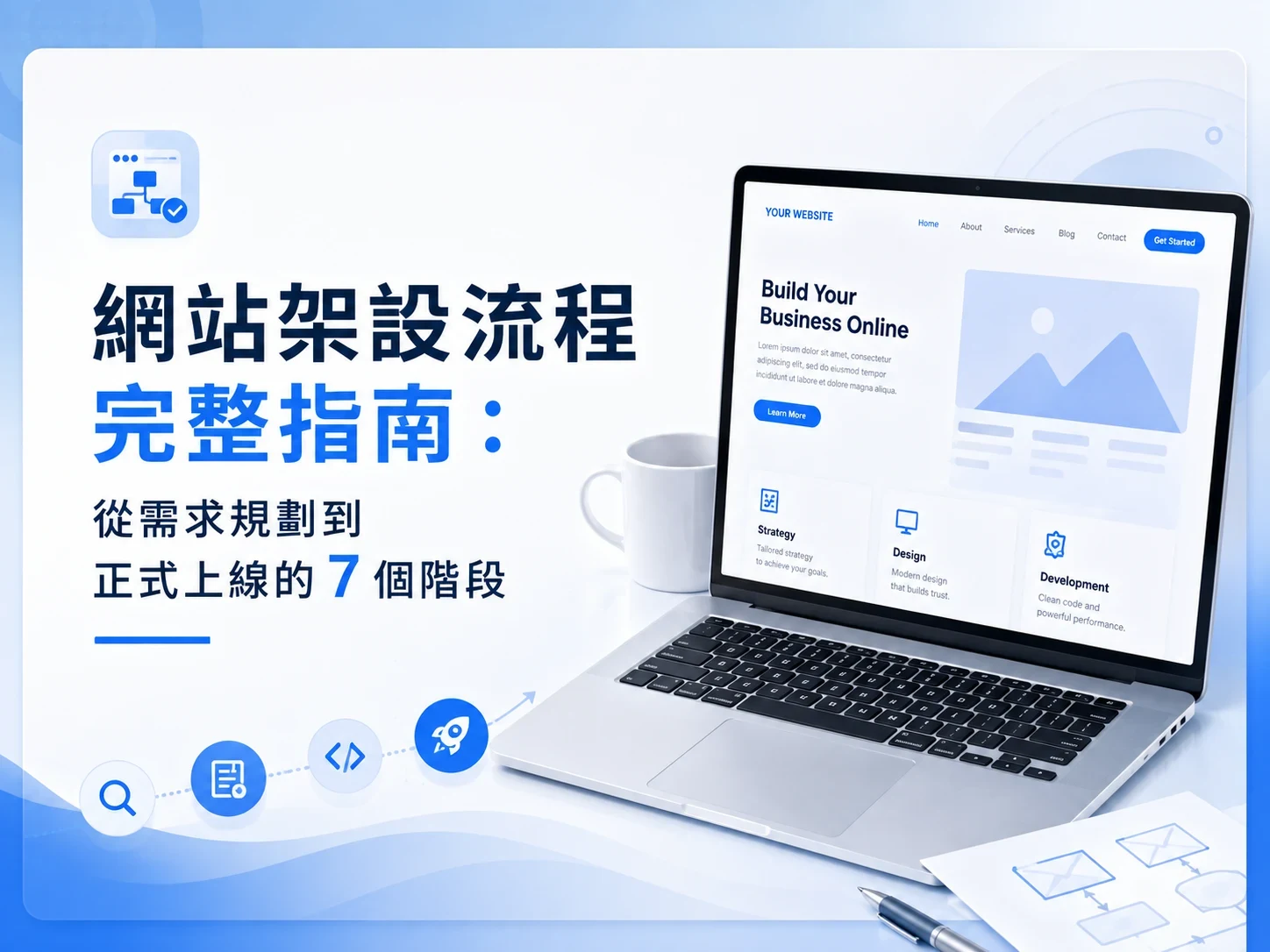
A typical business website development process can be roughly divided into the following 7 stages:
- Requirements analysis and goal confirmation
- Site structure and content planning
- Website design and user experience planning
- Website development and feature building
- Content setup and SEO configuration
- Testing and official launch
- Website maintenance and ongoing optimization
Below, we explain the key points of each stage one by one, to help you understand the whole process from initial planning to official launch.
Stage 1: Requirements analysis and goal confirmation
The first step in website development isn't choosing a design style, but confirming what the business hopes to achieve with the website.
Different businesses may have completely different needs for a website, for example:
- Building brand image
- Showcasing products and services
- Increasing inquiries from potential customers
- Improving search visibility
- Offering online transactions or services
So before starting work on a website, you usually need to confirm the following first:
- Company background and industry characteristics
- Target customers and usage scenarios
- The website's main purpose
- Required features and content
- Possible future expansion needs
A clear requirements analysis helps later design and development better match the business's expectations, and also reduces the cost of revisions during development.
Stage 2: Site structure and content planning
Once the website's goals are confirmed, the next step is to plan the overall site structure.
Site structure affects not only how users browse information, but also how search engines discover and understand the website's content. Google's SEO Starter Guide also recommends building a logical site structure and using clear links between pages to help users and search engines understand them.
Common planning items include:
- Page categories
- Navigation menu design
- Content hierarchy
- How products or services are presented
- Contact and conversion flow
For example, a business website usually includes:
- Home
- About us
- Products / services
- Case studies
- News
- Contact us
If the business hopes to get organic search traffic through SEO, we also recommend planning keyword direction and content structure at this stage, rather than waiting until the website is finished to start adjusting.
Further reading:What is SEO?
Stage 3: Website design and user experience planning
Website design isn't just about visual appeal; more importantly, it should let users quickly understand the value the business offers.
The design stage usually plans:
- Visual style
- Brand colors and image
- Page layout
- User flows
- Mobile browsing experience
Good website design should balance brand presentation with user needs, so visitors can quickly find information and go on to make an inquiry or interact.
Stage 4: Website development and feature building
Once the design is complete, the project moves into the development stage.
This stage mainly turns the design mockups into a working website and builds the required features, for example:
- Content management in the admin
- Form system
- Membership features
- Booking system
- Ecommerce features
- Third-party service integrations
When developing the website, besides meeting current requirements, you should also consider whether it will be easy to expand in the future, so the business doesn't have to rebuild the website as it grows.
Stage 5: Content setup and SEO configuration
Once the website's basic structure is complete, the final content needs to be added, including:
- Text content
- Images
- Product information
- Service descriptions
Basic SEO settings should also be completed at the same time, for example:
- Page title (Title)
- Page description (Meta Description)
- URL structure
- Image alt text (Alt)
- Internal links
SEO doesn't start after the website is finished; it should be considered from the website planning stage to build a better search foundation.
Google's Search Essentials lists technical requirements, spam policies, and key best practices as the foundation for a website appearing in Google Search. So building search requirements in at the development stage is usually more sensible than making sweeping changes after launch.
Further reading:How to do website SEO
Stage 6: Testing and official launch
Before the website goes public, it needs thorough testing.
Common test items include:
- Desktop and mobile browsing
- Compatibility across browsers
- Form functions
- Website speed
- SEO settings
- Whether links work properly
Only after confirming the website runs reliably is it officially published so users can start browsing.
Before launch, you should also check the overall user experience. Google's official page experience guide recommends that websites pay attention to Core Web Vitals, secure connections, mobile display, and the usability of the main content, rather than only checking whether the website opens properly.
Stage 7: Website maintenance and ongoing optimization
Launch isn't the end of the project; it's the point where the business starts managing a digital asset.
Afterwards, you may need to:
- Update website content
- Analyze usage data
- Optimize SEO
- Add new features
- Adjust user flows
A good website should keep adapting as the business develops, rather than staying unchanged for years after it's finished.
Further reading:How long does website development take?
How long does website development take?
The time it takes to build a website varies with the type of website, feature requirements, how well content is prepared, and how efficiently both sides communicate.
Generally, a simple one-page website may take a few weeks, while a full business website, ecommerce website, or custom system may take several months or more.
Website development time doesn't simply depend on development speed; it includes multiple stages such as confirming requirements, content planning, design discussions, feature development, testing, and adjustments.
Below are reference timeframes for common website types:
Main factors that affect website development time
Even for the same type of website, development time can still vary between projects. Common factors include:
1. Whether requirements are clear
If the business already clearly understands the website's purpose, feature requirements, and content direction before work begins, it can usually greatly reduce later communication and revision time.
Conversely, if requirements keep being added or the direction keeps changing during development, the overall schedule may be affected.
2. How quickly content is prepared
Website content is one of the important factors affecting the schedule.
This includes:
- Company introduction
- Product information
- Images
- Case study content
- Brand materials
If the business can prepare complete materials in advance, website development usually goes more smoothly.
3. Feature complexity
The more features a website has, the longer the planning and development time it usually requires.
For example:
- Basic informational website
- Booking system
- Membership features
- Ecommerce transactions
- System integrations
Different features involve different levels of testing and adjustment.
4. Revision and approval process
Website development usually requires the business and the website development company to confirm the design and features together.
If both sides have a clear communication process, such as designating a point of contact and setting approval timelines, development can become much more efficient.
Website development isn't about finishing as fast as possible, but about completing, within a reasonable timeframe, a website that meets the business's needs, is of good quality, and can be expanded in the future.
When planning a website, we recommend that businesses look beyond development time and also confirm that the site structure, feature planning, and ongoing maintenance are well thought out, so they don't sacrifice long-term value in the rush to launch quickly.
What should a business prepare before building a website?

Website development isn't only the website development company's job; the materials and requirements the business itself provides also directly affect how efficiently the website is built and how it turns out.
Many website delays or repeated revisions aren't caused by technical problems, but by unclear early requirements, insufficient content, or a lack of shared understanding of the website's goals.
So before starting work on a website, we recommend that businesses prepare the following:
1. Confirm the website's goals
Before starting to plan a website, a business should first think about:
- What problem should the website solve?
- Which customers do you hope to attract?
- What action do you want visitors to take?
For example:
- Building brand image
- Increasing inquiries from potential customers
- Showcasing products and services
- Offering online transactions
- Building a customer service platform
Different goals affect the site structure, feature planning, and later content direction.
2. Organize company and product information
A website needs to present the business's core information, so we recommend preparing in advance:
- Company introduction
- Brand story
- Products or services
- Industry characteristics
- Success stories
- Customer cases
- Frequently asked questions
Complete, clear content not only helps visitors understand the business, but also makes the website's information more complete in search engines.
3. Prepare images and brand assets
Visual assets directly affect how the website looks.
We recommend preparing:
- Company logo
- Product photos
- Photos of the factory or office
- Team photos
- Brand guidelines
- Other marketing materials
If you lack suitable images, you can also discuss with the website development company in advance whether photography, design, or other image sources are needed.
4. Plan the website's feature requirements
A business should first think about which features the website will need, for example:
- Contact form
- Booking system
- Multilingual support
- Membership features
- Ecommerce features
- AI customer service
- System integrations
Not every feature has to be completed in the first phase, but planning future needs in advance can prevent a site structure that can't support later expansion.
Further reading:TimTech sample websites
5. Confirm website management and maintenance needs
After launch, a business usually needs to keep updating content, so we recommend confirming in advance:
- Which content needs to be managed in-house?
- Is an admin editing function needed?
- Is a website maintenance service needed?
- Who will be responsible for website updates in the future?
Planning how the website will be managed makes it easier to run over the long term after launch.
6. Prepare a point of contact for communication
Website development usually requires multiple rounds of confirmation between the business and the website development company.
We recommend that the business designate a main point of contact to help:
- Confirm requirements
- Provide materials
- Review designs
- Consolidate internal feedback
A clear point of contact can effectively reduce information gaps and improve overall efficiency.
Website development is a collaborative process; the more thoroughly the business prepares, the more smoothly development usually goes.
Spending some time organizing requirements and materials before work begins not only reduces the cost of later revisions, but also helps the website development company understand the business's direction more accurately and build a website that truly meets its needs.
How can you make the website development process go more smoothly?

Website development is a process that requires collaboration between the business and the website development company. Besides the company's expertise, how the business takes part during the project also affects how efficiently the website is built and how it turns out.
If you want the website to be completed smoothly, we recommend starting from the following areas:
1. Confirm website goals and priorities before starting
Many problems during website development come from not clearly defining requirements at the start.
Before the project begins, we recommend confirming:
- What is the website's main goal?
- What are the most important features?
- Which content needs to be completed first?
- What expansion needs might there be in the future?
A clear direction helps the website development company propose a more suitable plan, and avoids repeatedly changing direction during development.
2. Prepare website content and assets in advance
Website development isn't just design and development; content is also an important factor affecting progress.
If the business can prepare in advance:
- Company introduction
- Product information
- Images
- Case study materials
- Brand information
the website development company can plan and build pages more quickly.
If content remains unconfirmed, the launch may be delayed while waiting for materials, even if development is already complete.
3. Set up a clear communication process
Website projects usually involve input from different people within the business, so we recommend setting up a clear way to communicate.
For example:
- Designate a main point of contact
- Consolidate revision feedback in one place
- Set approval timelines
- Check project progress regularly
A good communication process can reduce repeated revisions caused by inconsistent information.
4. Confirm the key structure first, then adjust details
During website development, the business may want to adjust many details, such as images, text, or layout.
However, we recommend confirming these first:
- Site structure
- User flows
- Page content
- Feature requirements
These affect the overall direction of the website.
Adjusting visual details after the main structure is settled usually makes the project run more efficiently.
5. Stay flexible and leave room for future expansion
A business's needs may change as the market and its operations develop, so a website doesn't necessarily need to have every feature completed at once.
A better approach is to:
- Complete core requirements in the first phase
- Make sure the site structure can be expanded
- Add features step by step based on business results
This not only keeps initial costs under control, but also lets the website keep improving as the business grows.
The key to completing website development smoothly isn't just choosing good technology or design, but whether the business and the website development company work well together.
With clear goals, thorough preparation, and effective communication, you can reduce uncertainty during development, make the website better meet the business's needs, and make the whole build go more smoothly.
Further reading:What should you watch out for in website development?
Frequently asked questions (FAQ)
What is the first step in website development?▼
The first step in website development isn't starting the design, but confirming the website's goals and requirements.
A business should first think about what it wants the website to achieve, such as building brand image, increasing customer inquiries, showcasing products and services, or offering online transactions.
Clear goals help with later planning of the site structure, features, and content direction, and also reduce the cost of revisions during development.
What materials need to be prepared during website development?▼
A business usually needs to prepare materials related to its brand, products, and services, such as:
Conclusion
Website development isn't simply a design or development project; it's a process that starts from the business's needs and gradually turns them into a digital tool.
When planning a website, we recommend that businesses don't focus only on how soon the website can be finished, but think about whether it truly fits the business's goals, whether it can be expanded well, and whether it can support future brand building and digital marketing.
Spending a bit more time on planning early on often reduces the cost of later revisions and lets the website deliver value over a longer period.
If you'd like to learn more about business website planning, feature requirements, or the development process, feel free to contact TimTech.