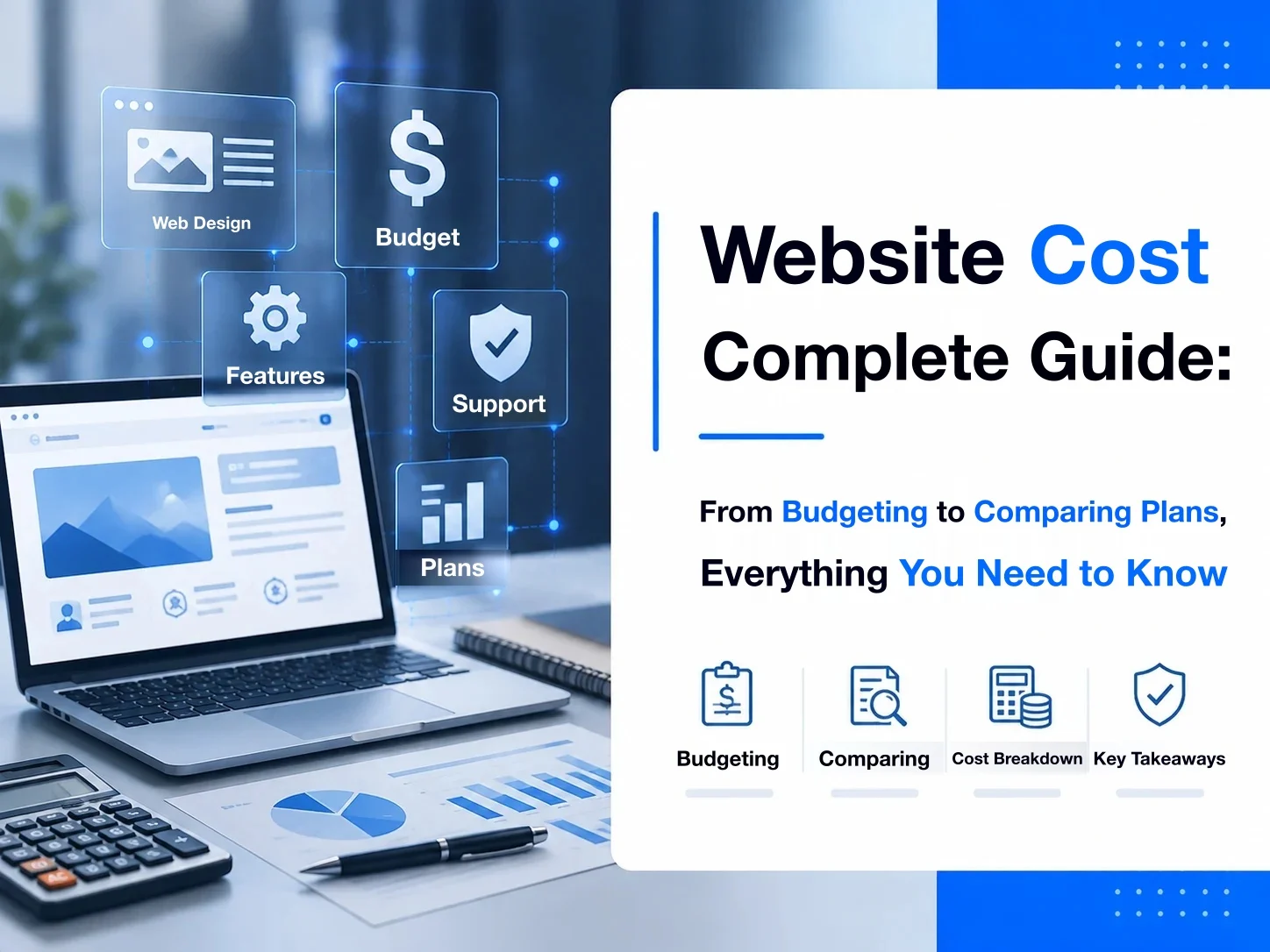
When planning a business website, “website development cost” is the question almost every business owner cares about most. Yet prices found online range from a few thousand NT dollars to several hundred thousand, and even for the same kind of business website, quotes from different companies can differ several times over, making it hard to know how to judge.
In fact, websites don't have a fixed price. What really drives the cost isn't a single number, but the website's feature requirements, design quality, level of customization, and whether it can support the business's future growth. If price is your only consideration, it's easy to choose an option that doesn't fit your needs, and you may end up paying more later because of missing features, difficult maintenance, or the need for a redesign.
This article walks you through the price ranges for business websites, the main factors that affect website development costs, and suitable budget planning for different types of websites. We hope it helps you not only know “how much it will cost” when planning a website, but also understand “where it's worth investing,” so you can find the website option that best fits your business.
Key takeaways
- A business website typically costs about NT$80,000~300,000 to build.
- Website prices are mainly affected by features, design, and the level of customization.
- Besides the build cost, you also need to consider domain, hosting, maintenance, and marketing costs.
- We recommend planning your budget around your business goals, rather than only comparing prices.
- Choosing a scalable site structure can reduce future redesign costs.
How much does website development cost?
Generally, there is no fixed standard for business website development costs; they vary with the type of website, feature requirements, design approach, and level of customization. In the current Taiwan market, business website prices can roughly be divided into the following types:
| Website type | Reference price range |
|---|---|
| One-page website (Landing Page) | About NT$10,000~50,000 |
| Basic brand website | About NT$30,000~100,000 |
| Corporate website | About NT$80,000~300,000 |
| Ecommerce website | About NT$100,000~500,000 or more |
| Custom website / system platform | From about NT$300,000 |
Further reading: 6 things to check on a web design quote
Note that these prices are for reference only; actual costs still vary with project requirements. For example, among corporate websites, some companies only need to present company information and product introductions, while others need multilingual support, a membership system, booking features, third-party system integrations, or SEO optimization. The development costs of the two will naturally differ significantly.
So when planning a website budget, rather than just comparing prices, it's more important to understand what each cost includes, and whether those features truly fit the business's current needs and future direction.
Next, we'll explain the main factors that affect website development costs, to help you understand why website quotes vary so widely.
What factors affect website development costs?

If you've ever asked different website development companies for quotes, you may have noticed that prices for the same type of business website can differ several times over. This doesn't mean one company is especially expensive or cheap; it's because every project has different requirements, and the factors that affect cost differ too.
Here are the most common factors:
1. Website type
What the website is for directly affects the overall development cost.
For example, a one-page website, a brand website, an ecommerce website, or a custom system each requires different features, development time, and maintenance costs, so prices differ noticeably as well.
2. Feature requirements
The more features a website has, the higher the development cost usually is.
Common features include:
- Membership system
- Booking system
- Product management
- Online payment
- Multilingual support
- Admin management
- Third-party system integrations (CRM, ERP, LINE, etc.)
If the website only needs to present company information, the cost is usually much lower than for a website with multiple interactive features.
3. Design requirements
Some businesses choose ready-made templates, while others want a custom design based on their brand image.
Custom design requires more planning, design, and revision time, so it usually costs more to produce than a template-based website.
4. Content scale
The more pages a website has, the more content needs to be planned and produced.
For example:
- Company introduction
- Product or service pages
- Case studies
- News
- FAQ
- Contact us
The more complete the content, the longer the overall production time.
5. SEO and website performance
Today's business websites don't just present information; they also need to balance search visibility and user experience.
If items such as SEO structure, website speed optimization, responsive design (RWD), and Core Web Vitals are included during planning, the upfront cost may be higher, but it can reduce the cost of reworking the website later and improve its long-term value.
Website quality includes not only design and features, but also the actual user experience. Google's official Core Web Vitals documentation lists loading performance, interactivity, and visual stability as important metrics for measuring real-world page experience.
6. Ongoing maintenance and scalability
Launch is only the beginning; afterwards, you may still need to add features, update content, or make adjustments as the business grows.
If the website itself has good scalability and maintenance mechanisms, it not only lowers the cost of later changes, but also extends the website's lifespan and avoids having to redevelop it because of structural limits.
As these factors show, website development cost isn't determined by any single factor, but is the combined result of all your requirements.
So rather than chasing the lowest price at the start, we recommend first clarifying which features the business really needs and what it hopes the website will achieve in the future. That way you can find the website option that best fits your needs and get the most value out of every part of your budget.
Further reading:compare website platforms first
Further reading: how web design quotes are priced
Price comparison of different website types
Different types of websites differ in features, design requirements, and development approach, so their prices also differ. Before planning your website budget, we recommend first understanding the characteristics of each type, then choosing the option that best fits your business.
| Website type | Suited for | Reference price range |
|---|---|---|
| One-page website (Landing Page) | Event promotion, a single product, or short-term marketing | About NT$10,000~50,000 |
| Basic brand website | Personal brands, small businesses | About NT$30,000~100,000 |
| Corporate website | SMEs, brand companies | About NT$80,000~300,000 |
| Ecommerce website | Businesses that need to sell online | About NT$100,000~500,000 or more |
| Custom website / system platform | Special workflows or large enterprises | From about NT$300,000 |
One-page website (Landing Page)
One-page websites suit event promotion, product promotion, or ad campaigns. All the information is concentrated on a single page, so development is quick and the cost is relatively low.
However, if the business later needs to keep adding content, work on SEO, or expand features, a one-page website usually offers limited flexibility.
If you're still deciding whether a single page fits the website's goals, read Is a One-Page Website Right for You? to compare one-page and multi-page structures.
Basic brand website
A brand website is mainly used to introduce the company, brand, or services, and usually includes basic information such as a company introduction, services, and contact details.
This type of website suits newly founded companies or businesses that want to build a brand image, and it's the first step for many businesses in setting up an official website.
Corporate website
Besides presenting the brand image, a corporate website usually adds content such as product introductions, case studies, news, FAQs, and multilingual support, helping the business expand its market and build brand trust.
Businesses that want their website to become an important tool for long-term operations usually choose this type.
Ecommerce website
Besides displaying products, an ecommerce website also needs features such as a shopping cart, payments, shipping, a membership system, and promotions, so its development and maintenance costs are usually higher than those of a typical business website.
If the business needs to sell products online, we recommend planning the complete operating workflow from the start, rather than just building shopping features.
Custom website / system platform
When a business has special workflows, internal management needs, or needs to integrate with other systems, it usually chooses a custom website or system platform.
For example, membership management, booking systems, ERP/CRM integration, and a custom admin all need to be planned and developed around the business's needs, so costs also vary with project scale.
No single type of website suits every business. What really matters is choosing the website option that best fits the business's current stage of development, budget, and business goals.
Choosing a scalable site structure from the start can also reduce the cost of future redesigns or redevelopment, letting the website grow together with the business.
What other costs are there after the website is built?

When planning a website, many businesses focus only on the build cost and overlook the ongoing costs that still need to be considered after launch.
Not every website will incur these costs, but knowing about them in advance lets you plan your overall budget more accurately and avoid unexpected expenses later.
1. Domain fees (Domain)
A domain is the website's address, for example www.example.com.
Generally, a domain must be renewed once a year. Depending on the domain type (such as .com, .com.tw, .tw), it costs from a few hundred to a few thousand NT dollars a year.
2. Hosting fees (Hosting)
A website must be placed on a host before users can browse it over the internet.
Hosting fees vary with website traffic, performance requirements, and the services included. Common options include shared hosting, cloud hosting, and dedicated servers, costing from a few thousand to tens of thousands of NT dollars a year.
3. Website maintenance fees
After launch, the website still needs regular system updates, bug fixes, data backups, and security checks to reduce the risk of failures or attacks.
Some website development companies offer annual maintenance plans, while some businesses pay per job as needed, so maintenance fees vary with the services included.
4. Feature expansion costs
As the business grows, the website may also need new features, for example:
- Membership system
- Online booking
- Multilingual support
- AI customer service
- Third-party system integrations (CRM, ERP, etc.)
If the website is scalable from the start, adding features later is usually more efficient and can reduce redevelopment costs.
5. SEO and digital marketing costs
Launching a website doesn't mean it will get traffic.
If you want to keep gaining potential customers through Google Search, AI search, or ads, you usually also need to invest in digital marketing such as SEO, content marketing, or Google Ads.
These costs vary with the business's marketing strategy and goals. We recommend treating them as part of running the website, rather than a one-time build cost.
If the business wants the website to keep gaining visibility through search, it needs to keep working on content and search optimization after launch. Google's SEO Starter Guide also defines SEO as a set of optimizations that help search engines understand content and help users find the website through search.
6. Future redesign costs
As a business grows, its brand positioning, products and services, or market needs may change, so the website usually needs timely adjustments or a redesign as well.
If the site structure is well planned and scalable, future redesigns usually cost less. Conversely, if there was no thorough planning at the start, you may need to invest more time and budget in redevelopment.
The build cost is only part of the overall investment in a website; what matters more is whether the website can support the business's development over the long term.
When planning a website budget, besides the initial build cost, we also recommend factoring in ongoing investments such as website maintenance, feature expansion, and digital marketing. Only then can you build a business website that truly keeps creating business value.
How should a business plan its website budget?
There's no standard answer for a website budget. What really matters isn't how much you spend, but which goals the website needs to achieve.
If the website plan matches the business's needs, even a higher budget can be a worthwhile long-term investment. Conversely, if you choose an option that doesn't fit your needs at the start, redesigning or rebuilding the website later may end up costing more.
Below are several common website needs to use as a reference when planning your budget.
Building a brand image
If the website's main purpose is to build a brand image and help customers quickly understand the company, products, and services, a brand website is usually the main choice.
Recommended areas to invest in:
- Brand image design
- Responsive website (RWD)
- Basic SEO structure
- Contact form
- Company and product introductions
This type of website usually doesn't need many custom features, but it should focus on design quality and user experience, so the business can make a professional and trustworthy first impression.
Getting more customers through the website
If, beyond presenting information, you want the website to keep bringing in inquiries and business opportunities, we recommend treating it as a sales tool for the business, not just a platform for showcasing the brand.
Recommended areas to invest in:
- SEO structure planning
- Clear calls to action (CTA)
- Form and booking flows
- Success stories and trust-building content
- Website speed and user experience
A website that effectively helps the business win potential customers usually offers more long-term value than simply chasing a low price.
Special features or operational needs
If the business needs a membership system, booking management, multilingual support, online quotes, system integrations, or other custom features, we recommend planning the requirements thoroughly from the start.
Although the upfront investment is higher, it avoids repeated changes later caused by structural limits and lowers long-term operating costs.
Leaving room for future growth
Many businesses only start thinking about adding features, working on AI SEO, or bringing in AI tools after the website is built, and at that point it often takes more time and money.
So when planning a website, we recommend choosing a site structure with good scalability, so the website can keep being upgraded as the business grows, instead of being rebuilt every few years.
When planning a website budget, a business shouldn't just compare prices, but should consider whether the website can truly help it achieve its business goals.
A well-planned, scalable website not only lowers future maintenance and redesign costs, but also keeps supporting brand building, search visibility, and customer acquisition, creating long-term value for the business.
How do you avoid pitfalls in website development?

A website usually stays with a business for years and may even become an important tool for brand building and customer acquisition. So when choosing a website option, you shouldn't just compare prices; it's more important to confirm whether the website truly fits the business's needs.
Below are some of the most common problems businesses run into when planning a website, to help you reduce the risk of later changes or having to rebuild the website.
1. Don't just compare prices
Website quotes vary widely, and the difference usually reflects differences in services, feature planning, design quality, and ongoing support.
If you only choose the cheapest option, you may run into problems such as missing features, difficult expansion, or a lack of ongoing maintenance, and end up having to rebuild the website, raising the overall cost.
When comparing quotes, we recommend also finding out which services each option includes, rather than looking only at the final price.
2. Confirm the website's goals first, then decide on features
Many businesses ask for lots of features right away, without first thinking about what the website is really for.
For example:
- Do you want to improve your brand image?
- Get more inquiries through the website?
- Provide product information?
- Sell products online?
- Offer membership services?
Different website goals call for different features and budgets.
Clarifying your needs first and then planning features helps you avoid unnecessary costs.
3. Check whether the website is scalable
Businesses keep growing, and their website needs change along with them.
In the future, you may need to add:
- Multilingual support
- AI customer service
- Booking system
- Membership system
- CRM integration
- More product pages
If the site structure isn't scalable, every new feature requires major changes or even redevelopment, which raises long-term maintenance costs.
4. Don't overlook SEO and website performance
Some websites look beautiful but don't take search engine optimization (SEO), website speed, or the mobile browsing experience into account.
Even after launch, websites like these may struggle to get organic search traffic, which affects later marketing results.
We recommend including SEO structure, website speed, and responsive design (RWD) during the planning stage, so you can build a stronger foundation for the website.
5. Confirm whether ongoing maintenance and technical support are provided
Launching the website doesn't mean the project is over.
Afterwards, you may still need to update content, fix problems, adjust features, or optimize the website in response to market needs.
So when choosing a partner, we also recommend finding out whether they provide ongoing maintenance, technical support, and feature expansion services, so you aren't left without help if problems come up after launch.
When choosing a website option, the most important thing isn't finding the cheapest price, but finding a website that truly fits the business's needs and can be run over the long term.
By spending a little more time in the planning stage clarifying your needs, comparing options, and confirming the website's scalability and maintenance mechanisms, you can greatly reduce the cost of later changes and make the website an important asset for the business's long-term growth.
Further reading:What should you watch out for in website development?
How to choose a web design company
Price is only part of the comparison. Look at whether they take time to understand your needs, have relevant work to show, support the site after launch, and plan around business results. For the full checklist and questions to ask, see How to choose a web design company.
Frequently asked questions (FAQ)
What's the minimum budget for website development?
For a simple one-page website or basic brand website, the budget is usually about NT50,000. For a complete corporate website, common budgets fall around NT300,000. If you need a membership system, booking features, multilingual support, or other custom features, it may exceed NT$300,000.
We recommend not making price your only consideration, and instead choosing a website option that fits the business's needs.
How long does website development take?▼
Website production time varies with the scale of the project.
Generally, a one-page website takes about 2~4 weeks; a brand website takes about 1~2 months; and a corporate website with more features or a custom system may take 2~6 months or more.
When requirements are clear and both sides work well together, the development timeline can usually be shortened effectively.
Do I still need to pay maintenance fees after the website is built?▼
Most websites need regular maintenance, including system updates, security checks, data backups, and feature adjustments.
Some website development companies offer annual maintenance plans, while others charge per job. So we recommend confirming the maintenance scope and pricing before the website is built, to avoid extra fees later.
Further reading:TimTech's website building service
Conclusion
There's no fixed answer to website development costs. What really affects the price isn't just the number of pages or features, but:
What the business hopes to achieve through the website, and whether the website can support its future growth.
When planning a website budget, rather than chasing the lowest price, we recommend starting from the business's needs: understanding which features you really need, where it's worth investing, and whether the website has good scalability and long-term maintainability.
If you're planning a business website but aren't sure how much budget to prepare, which type of website to choose, or which features truly fit your business's needs, feel free to contact TimTech.