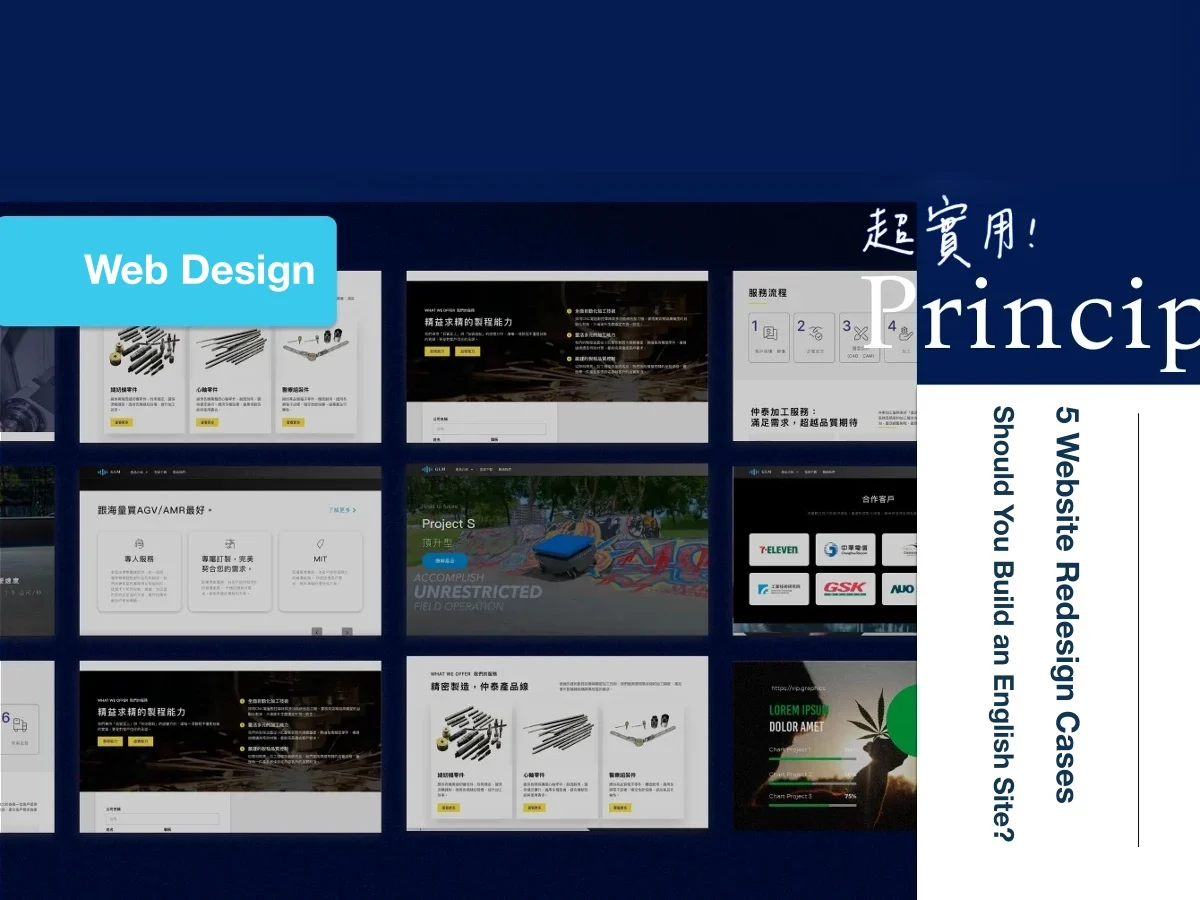
When a business starts reaching into international markets, “Should we build an English website?” is often one of the first questions raised. This decision isn't just about adding another language version; it affects your brand image, overseas exposure, and new business opportunities. But should you do it, how should you do it, and how far should you go? There's no standard answer to any of these.
This article uses 5 real website redesign cases to help you find your direction. If you've ever wondered whether to build an English version of your website, or where to start, this article walks you through the full picture in simple, clear terms and offers clear, practical advice. We hope it helps you make a choice that suits your business with more confidence.
3 things to think about before building an English website

Building an English website isn't as simple as translating a few paragraphs. It affects your brand positioning, marketing strategy, and staffing. The following three questions are the core decision points you need to clarify before you begin.
Who are your potential overseas customers?
Not every business needs an English website. What matters is whether you really have international potential.
Look back and check: Have overseas buyers ever contacted you on their own? Have you exhibited at international trade shows or gained exposure on international platforms? Do you have overseas partners promoting your products? If the answer is yes, an English website isn't just necessary; it's the foundation of your brand image.