Add LINE
TimTech
Book a consultation
Book a consultation
  1. Home
  2. /News
  3. /Internet marketing: seven strategies for a model that fits

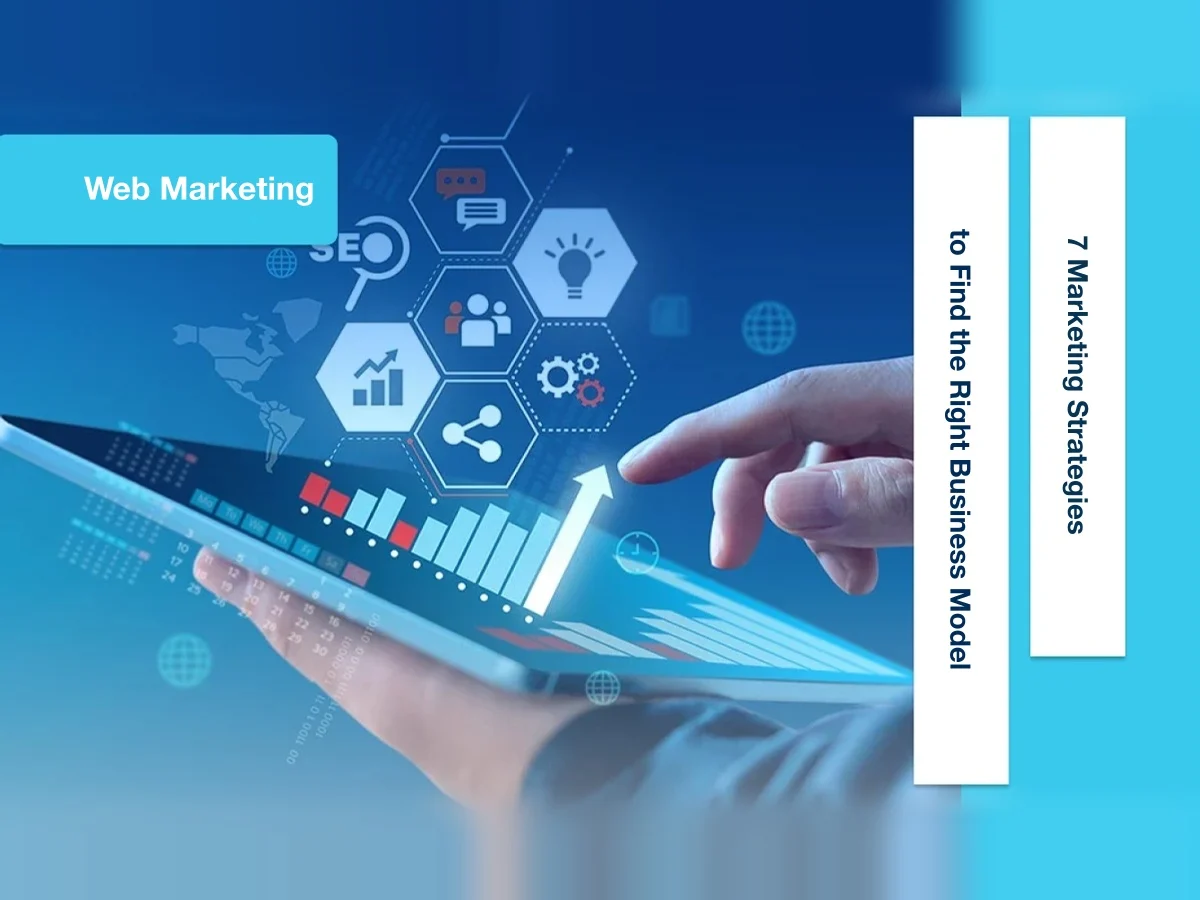
Internet marketing: seven strategies for a model that fits

圖片預留
2024.08.04Updated 2026.10.07
  • SEO and digital marketing
  • TimTech news

Summary

In a little more than a decade, internet marketing became a normal part of business. Seven strategies that have not gone out of date, as a way to find one that fits.

You may never have imagined it, but in just over a decade, internet marketing has become one of the defining disciplines of the 21st century.

In this article, I've put together 7 marketing strategies that never go out of style, so you can find the one that suits you best.

What is internet marketing?

Internet marketing, as the name suggests, is marketing through the internet. It means much the same as digital marketing or online marketing: all of them use technology and the internet to carry out marketing tasks.

As smartphones have spread and most people have shopped online, internet marketing has boomed and taken many different forms, which I'll cover in more detail in the next section.

Advantages of internet marketing

So what are the benefits of internet marketing? I'm sure you can name several, but I've still summarized them here to give you a basic picture.

  • Fast, convenient service
  • Low operating costs
  • Easy to track marketing data
  • Better targeting of your ideal customers
  • No geographic limits
  • Available 24 hours a day
  • Stable and reliable over the long term

These advantages have directly and indirectly pushed the real world toward the “virtual world.” Beyond internet marketing, AI and VR/AR technologies are set to become mainstream worldwide.

The key to internet marketing: content

Share

On this page

  • What is internet marketing?
  • Advantages of internet marketing
  • The key to internet marketing: content
  • Seven types of internet marketing
  • Content marketing
  • Provide valuable content
  • Common forms of content
  • Content marketing examples for the 3 stages
  • SEO marketing
  • Get your keywords onto Google's first page
  • On-page SEO
  • Off-page SEO
  • SEO marketing example
  • Affiliate marketing
  • Earn commissions by helping sell products
  • 10 common types of affiliate products
  • Affiliate marketing example
  • Email marketing
  • The most cost-effective form of proactive marketing
  • Three steps of an email marketing strategy
  • Email marketing example
  • Social media marketing
  • Spreading through social media
  • Social media marketing examples
  • Influencer marketing
  • Common influencer marketing examples
  • Advertising
  • Ads as a short-term tactic
  • Advertising example
  • Conclusion

TimTech

Ideas, made real.

We help B2B companies turn the website into a long-term asset: a clearer position, search that compounds, and inquiries that actually get handled.

Explore

  • Home
  • News
  • FAQ
  • Cases
  • Contact

Services

  • Website Development
  • Search growth
  • From inquiry to close

Industries

  • Print shops
  • Court-auction leads

Contact

  • Email:service@timtech.tw
  • Address:10F.-2, No. 118, Dazhong S. St., West Dist., Taichung City 403533 , Taiwan
  • LINE:Message us on LINE

© 2026 TimTech. All rights reserved. | Power By TimTech

  • Privacy
  • Terms

If internet marketing has one core key, I'd say it's “content.”

By content, I mean YouTube videos, blog posts, Instagram images or ad copy. All of these are “content,” and content is what decides whether internet marketing succeeds.

Once you learn to create “valuable content,” no matter how marketing platforms or methods change, you'll be able to combine them to generate greater returns and greater influence.

Seven types of internet marketing

As mentioned above, the core of internet marketing is “content,” and the types of internet marketing largely revolve around the “form of content,” each developing its own focus and field.

I've summarized the seven types of internet marketing below, with simple examples to help you understand how they differ.

(1) Content marketing (2) SEO marketing (3) Affiliate marketing (4) Email marketing (5) Social media marketing (6) Influencer marketing (7) Advertising

Content marketing

Provide valuable content

According to the definition from the US-based Content Marketing Institute (CMI), content marketing focuses on creating “valuable,” “relevant” and “consistent” content that ultimately builds trust with customers and leads them to buy.

In one sentence, content marketing means giving customers “valuable content” over the long term. Whether it's useful, entertaining or popular, it can all be part of that content.

Common forms of content

“Content” can be expressed on different platforms in different forms. As long as it gives customers “valuable content,” whatever the form, it has a chance to make people remember your brand and products.

In other words, the point of content marketing is to develop “different forms of content for different audiences.” Here are 8 common forms.

  1. Blog posts
  2. Social media
  3. Email
  4. Infographics
  5. Ebooks
  6. Videos
  7. Live streams
  8. Podcasts

These different forms of content can be roughly grouped into three stages based on consumer behavior: the “awareness,” “consideration” and “decision” stages. I'll give an example for each.

Content marketing examples for the 3 stages

When consumers buy a product, they generally go through several stages: awareness, consideration and decision.

STEP 1 → Awareness stage

Customers at this stage usually haven't decided what to buy. They may just be browsing interesting content on Instagram or Facebook, and if they happen to scroll past timely copy that makes them smile, they're likely to come away with a strong “brand or product impression.”

For example, the image above uses “an excavator claw” filled with “money” to echo the word “hollowed out” in the headline, a clever design touch.

This draws readers' attention to the message in the image and to the group advocating the issue.

STEP 2 → Consideration stage

People at this stage usually already know they want to buy a certain product but are still deciding which brand. If you can answer their questions about the product at this point, you're very likely to convince them to buy.

For example, say I want to buy a fridge and open one of the pages that comes up for “fridge recommendations.” The article explains in detail what to look for in a fridge: capacity, operating noise, how you use it and energy efficiency. I can then choose a brand based on the specs I want.

STEP 3 → Decision stage

People at this stage have already decided on the brand and product, but the purchase process needs to be as smooth as possible, because even a hint of “hassle” can kill a customer's impulse to buy.

For example, even the “size of the buttons” that guide customers to buy can affect their willingness. If the buttons in image A are numerous and small while those in image B are simple and obvious, customers may decide to buy the product in image B. This is part of content marketing too.

SEO marketing

Get your keywords onto Google's first page

SEO marketing (search engine optimization) means optimizing content to rank on Google for the “keywords” customers search for. In other words, when customers search for “keywords” related to a product or service, they can find your product or brand page on Google's first page, which boosts your sales and gives your brand exposure.

Both SEO marketing and content marketing are closely tied to “content.” You could even say SEO marketing is a branch of content marketing, but SEO marketing places more emphasis on “optimizing article content for Google search.”

SEO can also be divided into on-page SEO and off-page SEO.

On-page SEO

On-page SEO broadly refers to optimization “inside the website,” including site structure, writing high-ranking articles, web design and user experience.

Writing high-ranking articles is the most important core skill. Once you learn it, you can rank any page or product you want to promote on Google's first page.

Off-page SEO

Off-page SEO broadly refers to optimization “outside the website.” The most important factor is how Google scores your website's authority: the more people read, share and repost links to your pages, the higher the score.

When your articles are read by many people and shared online with even more, Google will trust your website more and rank it higher. That's how off-page SEO works.

SEO marketing example

When I search for the keyword “robot vacuum,” the websites on Google's first page may become where I shop.

Data shows that 70% of traffic goes to Google's first page, so if the products I want to sell make it onto the first page, they're likely to get more purchases and exposure.

Affiliate marketing

Earn commissions by helping sell products

Affiliate marketing is often called a partner program. Simply put, you earn a percentage of commission by promoting other people's products or services.

You can work with companies you like as an affiliate partner, promote their products through that partnership and earn a percentage of commission.

The most common form of affiliate marketing is bloggers earning commissions through SEO (search engine optimization). Partnerships with influencers on platforms such as YouTube and Instagram are also common.

10 common types of affiliate products

Almost anything you see in daily life, virtual or physical, can be an affiliate product. Here are 10 common types. Anyone can promote the products they like based on their own interests, so there's a lot of freedom.

  1. Travel tickets (accommodation, flights, theme park admission)
  2. Pet supplies
  3. Consumer electronics and accessories
  4. Fitness equipment
  5. Online courses
  6. Online software or services
  7. Beauty and skincare products
  8. Baby and toddler toys and supplies
  9. Household goods
  10. Games

Affiliate marketing example

Beyond the product itself, how much you earn from affiliate marketing depends on “how many people buy.” In other words, to make money from affiliate marketing, it's usually easier to promote through self-owned media with high traffic, such as a website, Instagram or YouTube.

For example, I searched Google for “dog food,” and one of the websites listed several recommended dog foods for me.

I then clicked the link to one of the products. These links can be tracked, so once I complete a purchase, the website owner earns a percentage of commission.

Websites are the most common channel for affiliate marketing. The more people search and buy, the more commission you earn, making it a stable, low-cost, long-term marketing method.

Email marketing

The most cost-effective form of proactive marketing

Email marketing, as the name suggests, uses email to build trust with customers and generate profit.

You may wonder: most people stopped messaging each other by email long ago, so why use email marketing, which has been around for decades?

Compared with LINE or Facebook messages, email conveys information about products, services and brands more completely, without being confined to a tiny chat box. It can also be sent in bulk, so it's “cheap, fast and convenient” and keeps customers “buying again.”

No wonder data shows that a large share of sales in some industries still comes from email marketing.

Three steps of an email marketing strategy

To stress this once more: the essence of email marketing is “building trust” with customers. So it isn't like running ads, pushing the product from the start, nor like messaging a friend and rambling on without a point.

The method, again, is to build relationships through “valuable content.” Here's a quick introduction to the three steps of email marketing:

STEP 1 → Build your email list

At the very beginning, to attract readers to subscribe, you need to promise them what “benefits” they'll get if they subscribe to your emails.

These benefits could be a free ebook, entertaining content updated daily or all kinds of offers. In short, remember to tell your readers what “value” you can offer them.

STEP 2 → Write substantial content

Next, build relationships with your subscribers through substantial content. Make it as rich and engaging as possible, so that over time readers won't get tired of it and unsubscribe or block you, but will want to keep reading.

But our goal is “sales,” and the pitch can't feel sudden or uncomfortable. So if you understand what interests your readers and sincerely recommend the products or services you want to promote at the right frequency, there's a good chance it will turn into orders.

STEP 3 → Analyze your marketing results

Remember that your email list is your asset, and every email address is hard-won. That's why you need to analyze the results after each send.

The three main metrics are open rate, click-through rate and unsubscribe rate.

“Open rate” measures how many people opened the email you sent; “click-through rate” measures how many people clicked a link in the email after reading it; and “unsubscribe rate” measures how many people unsubscribed from your emails.

Finally, use these metrics to adjust the content, subject lines and links of your emails, and keep finding ways to give readers even more valuable content.

Email marketing example

There are usually two ways to collect customers' email addresses: one is a “subscribe to the newsletter” checkbox when they register as members; the other is letting them enter their email to subscribe directly (as shown below).

After subscribing, I regularly receive well-illustrated articles from this website and learn the things I want to learn.

In the end, because of the trust they've built with me, I buy the products or services they find useful, and they make sales as a result.

That's a simple email marketing example.

Social media marketing

Social media marketing means running marketing activities on online platforms where people gather, and it's one of the hottest marketing approaches today.

Spreading through social media

Social media marketing still relies on “content,” spread through “social media” to gain brand exposure and drive product sales.

So the key question in social media marketing is how to spread content successfully through each platform.

Every social platform has very different characteristics. To turn the same material into content that fits each platform, you first need to understand what makes each platform different.

Social media marketing examples

Instagram: tag popular keywords with “#” and pair them with attractive, rich images for marketing campaigns.

Facebook: promote products successfully through fan page posts, live streams and more, paired with lively, engaging content.

Influencer marketing

Compared with social media marketing, influencer marketing also uses social media, but it focuses more on the personal charm and influence of “influencers” and “opinion leaders.”

Like social media marketing, influencer marketing remains one of the most popular and effective methods.

Because the audience is made up of fans, brands save a lot of effort in “building trust” with them. People tend to favor these influencers' reviews and impressions over one-sided ads from companies.

That's why “sponsored posts” and “sponsorships” are now so widespread and varied.

Common influencer marketing examples

Sponsored reviews on social platforms: the most common sponsored products are beauty and skincare.

Sponsored YouTube projects: the sponsored content is more varied, and there are many ways to present it.

Sponsored blog reviews: mostly about travel and beauty or skincare products.

Advertising

The last type is advertising, which mainly means paid ads on Google, Facebook and Instagram.

Although ads have moved from newspapers and magazines to online social media, paid ads are no longer as effective as they once were, and rising ad costs also squeeze your profit margin.

Still, ads have their role as a “short-term tactic.”

Ads as a short-term tactic

Advertising is about executing short-term tactics. Unlike many of the methods above, which focus on building relationships with customers over the medium to long term, the goal of ads is to solve immediate sales problems and boost sales right away to make a profit.

That's why ads usually show results in a short time, both in traffic and in profit.

But keep in mind that a company's ultimate goal is “long-term operation.” If running ads for short-term sales would hurt your “brand image,” you shouldn't run them.

Advertising example

The most common are ads on Google, Facebook and Instagram. Ads on the latter two appear as posts, and Instagram also places ads in Stories.

Conclusion

This article covered 7 internet marketing strategies. I hope you now have a basic understanding, have found a business model that suits you and are ready to start your online business.

Previous

Google keyword rankings: research them, then move them up

Next

A first website on Cloudways: five steps toward an SEO-friendly site

Related articles

  • TimTech platform update: from a company site to a platform you can keep extending
    TimTech news

    2026.06.01

    TimTech platform update: from a company site to a platform you can keep extending

    TimTech has shipped the next stage of the platform. Past a company website, it n…

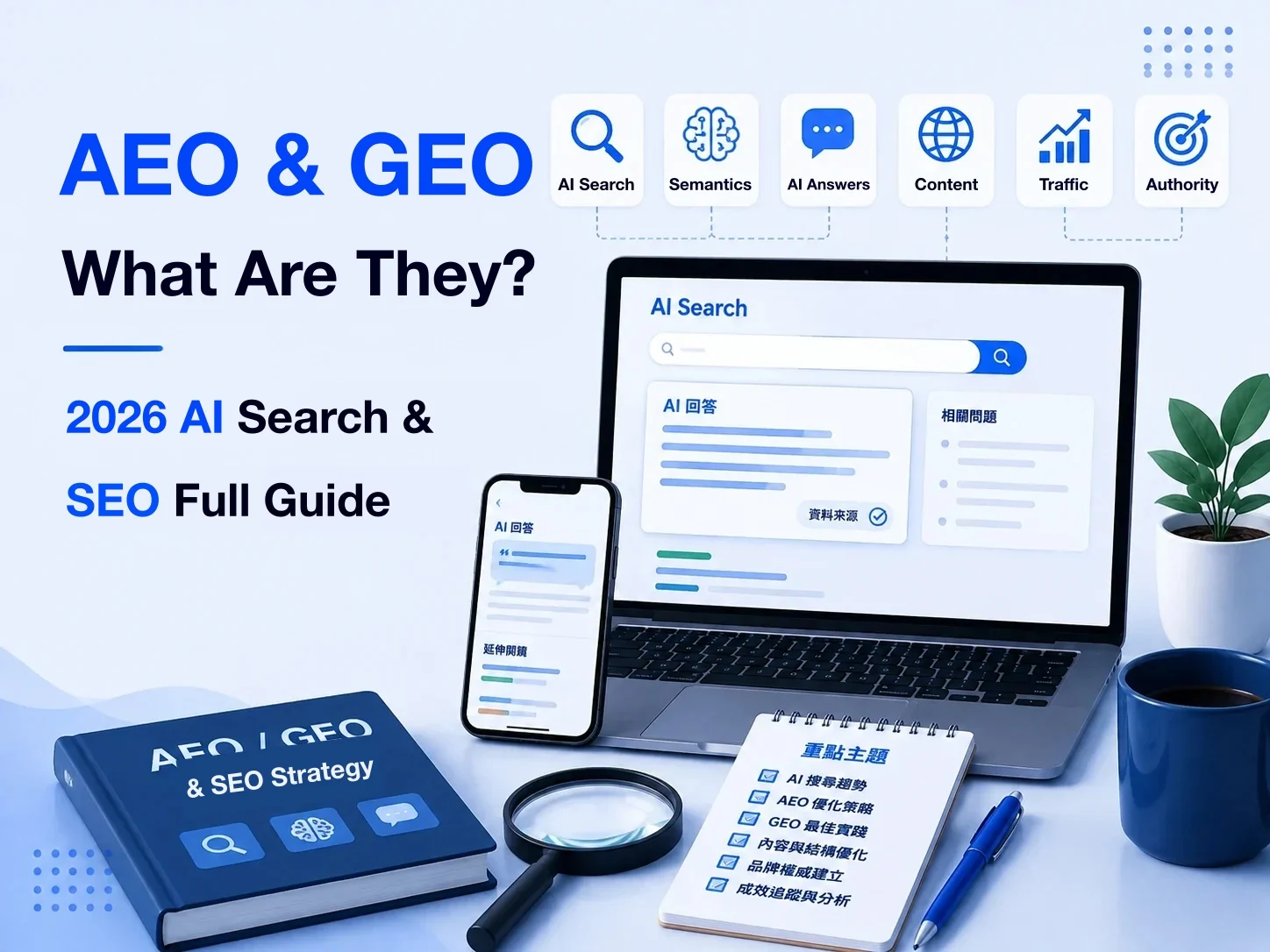
  • What are AEO and GEO? A 2026 guide to AI search and SEO for businesses
    SEO and digital marketing

    2026.09.03

    What are AEO and GEO? A 2026 guide to AI search and SEO for businesses

    What AEO and GEO are, how they differ from SEO, and how Google’s AI search picks…

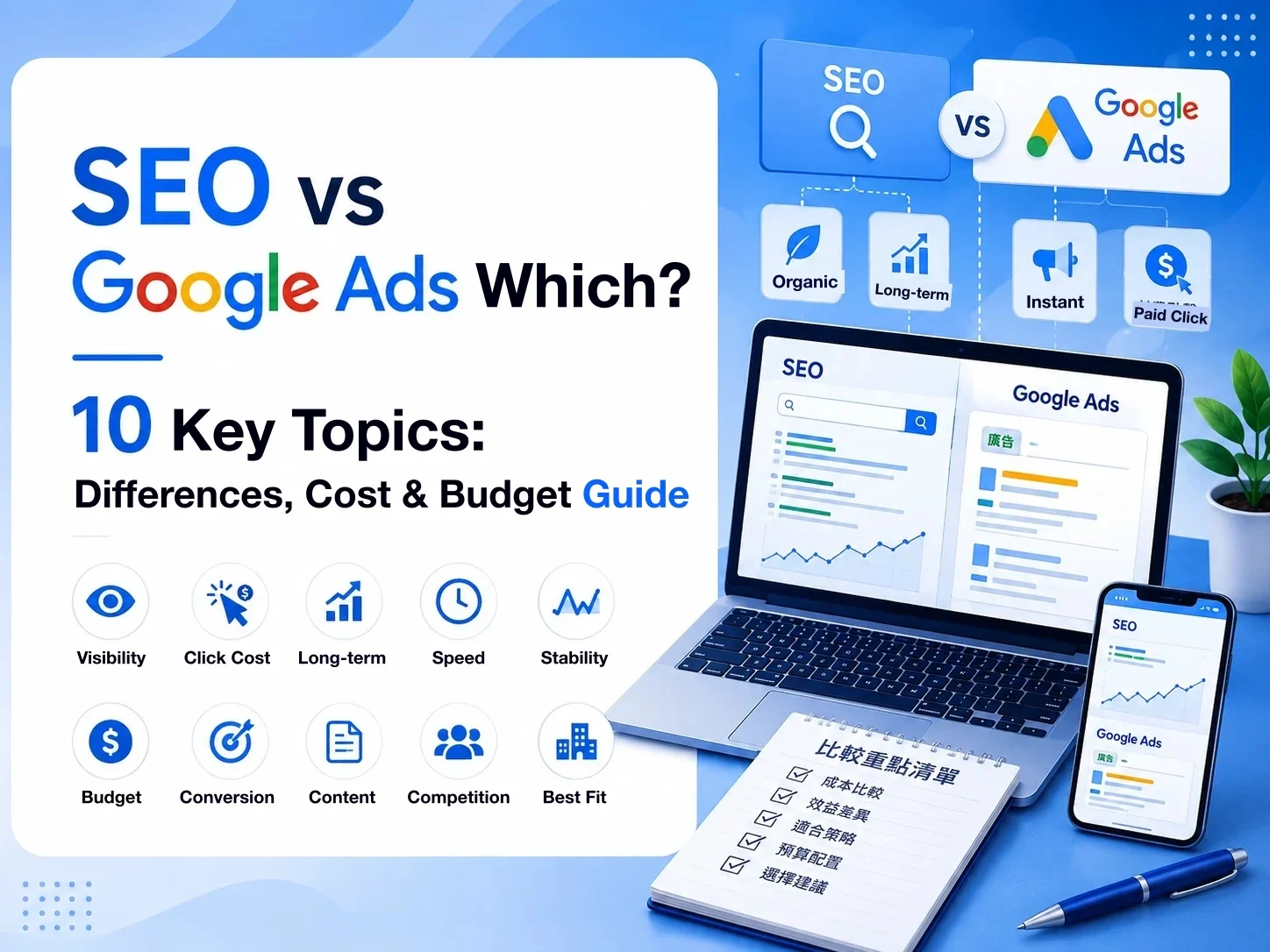
  • SEO or Google Ads? Differences, cost, and how to budget
    SEO and digital marketing

    2026.09.01

    SEO or Google Ads? Differences, cost, and how to budget

    How SEO and Google Ads differ in cost, how fast they show, and how long they las…