Add LINE
TimTech
Book a consultation
Book a consultation
  1. Home
  2. /News
  3. /SEO and SEM: six basics of search engine marketing

SEO and SEM: six basics of search engine marketing

圖片預留
2025.08.25Updated 2026.10.07
  • SEO and digital marketing

Summary

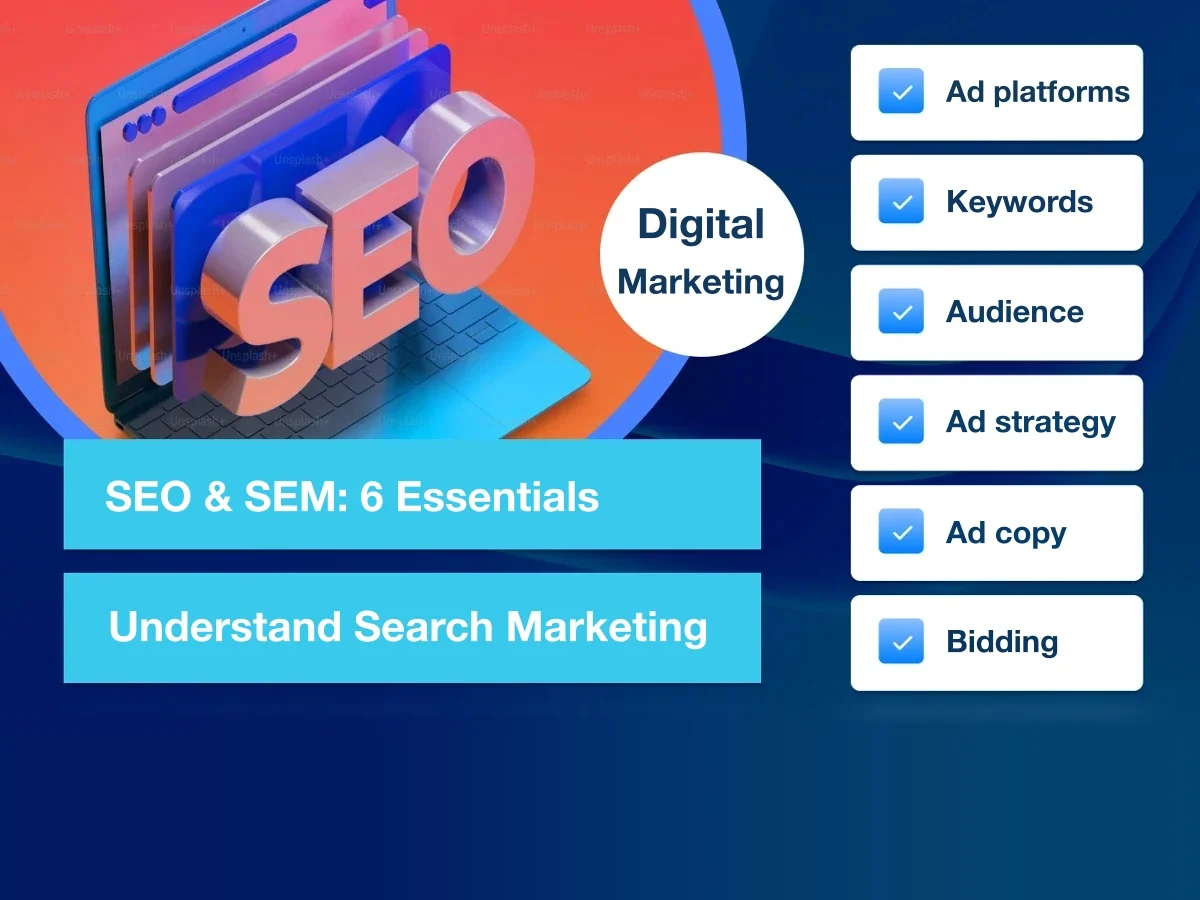
If you know internet marketing, you have heard of SEO. SEM, search engine marketing, is the wider idea, and it is often what people mean by SEO marketing. The difference between the two, then what SEM actually is.

If you've looked into online marketing, you've probably heard of SEO, but you may not have heard of SEM, which is often referred to as "SEO marketing."

In addition to helping you understand the difference between SEO and SEM, this article gives you a basic introduction to SEM so you can understand what search engine marketing actually is.

What is SEM?

SEM (search engine marketing) is a way of using paid strategies to increase search traffic. Broadly speaking, SEM covers both paid and free search engine optimization, but here SEM refers to the narrow sense: "paid search engine optimization."

With SEM, your brand can target specific keywords so that users see your ads when they search for those keywords, and you only pay when someone clicks.

Your ads are also labeled "Ad" so everyone knows that result is a paid placement.

The difference between SEO and SEM

As mentioned above, the biggest difference between SEO and SEM is that one is free and the other is paid.

SEO mainly works by producing high-quality, valuable web content for Google searchers, attracting them to click through to your pages and earning a steady stream of traffic.

SEM mainly works through paid ads, letting people who search for specific keywords see and click your page, and you are charged by the number of clicks.
Share

On this page

  • What is SEM?
  • The difference between SEO and SEM
  • A basic introduction to SEM
  • Choose an ad platform
  • Choose the keywords to target
  • Target your ideal customers
  • Understand the basics of running ads
  • Write ad copy
  • Ad auctions
  • How to improve results: keyword research
  • Conclusion

TimTech

Ideas, made real.

We help B2B companies turn the website into a long-term asset: a clearer position, search that compounds, and inquiries that actually get handled.

Explore

  • Home
  • News
  • FAQ
  • Cases
  • Contact

Services

  • Website Development
  • Search growth
  • From inquiry to close

Industries

  • Print shops
  • Court-auction leads

Contact

  • Email:service@timtech.tw
  • Address:10F.-2, No. 118, Dazhong S. St., West Dist., Taichung City 403533 , Taiwan
  • LINE:Message us on LINE

© 2026 TimTech. All rights reserved. | Power By TimTech

  • Privacy
  • Terms

Beyond that, there are other clear differences between the two:

SEOSEM
No payment required
Slower results
Less time-bound; rankings can last a long time
No label of any kind
Payment required
Fast results
Time-bound; it ends when the ad period is over
Labeled as an ad

If you want to learn how to earn free traffic by producing content, see this article: SEO tutorial

A basic introduction to SEM

Now that we've covered the difference between SEM and SEO, let's go through the basic concepts of SEM and how to get started, so you can gain a deeper understanding of it.

Choose an ad platform

SEM platforms are usually search engines, where your brand can place keyword ads. Currently the largest search engine is Google, followed by Bing.

  • Google Ads: the search engine with the highest market share, handling billions of searches every day, which can help you maximize your marketing results.
  • Bing Ads: Bing covers the users Google can't reach, usually by placing ads on Yahoo.

Choose the keywords to target

Just like SEO, SEM requires you to set keywords so that people who search for them can see your ads. You can choose ad keywords that meet the following three criteria:

  1. Makes sense and is logical
  2. Something people actually search for
  3. Low competition

The first point is easy to understand, but the second and third require analyzing "search volume" and "competition" to evaluate keywords.

Generally, the higher a keyword's search volume, the higher its competition and the more expensive the ads. So you don't necessarily need to target the highest-volume keywords; instead, choose keywords with moderate search volume and low competition.

We won't go into detail here due to space, but if you want to learn more keyword research techniques, see this article: Google Keyword Planner tutorial

Target your ideal customers

In marketing, targeting helps you precisely reach your target audience, so the people most likely to buy your product or service can see the ads you show them.

This is mainly done using the following four criteria:

  1. Location targeting: target different regions
  2. Ad schedule targeting: target specific times
  3. Demographic targeting: target different ages and genders
  4. Device targeting: target phones and tablets

Using these criteria, you can define a relatively accurate target customer, increase your ads' reach, and effectively improve your ad conversion rate.

Understand the basics of running ads

Understanding the levels and organization of an ad account helps you plan themes for different ads, track each ad's performance, and optimize each one: replacing underperforming ads and keeping the ones that perform well.

  1. Campaign: set your overall marketing goals and budget.
  2. Ad group: set audience targeting, including age, gender, region, device…
  3. Ads: set your ad copy and keywords.

The first two need to be set up before you run your ads, so optimization focuses mainly on the third. You can use different keyword combinations or different ad copy to reach the same audience, testing continuously to find the best-performing keyword combinations.

Write ad copy

In most cases, ad copy mimics organic search results, which means you need to write it in a way that makes people want to click.

Besides the headline, description, and URL, you can also add the following to your ads:

  • Phone number
  • Address
  • Reviews
  • Prices
  • Email
  • Product carousel
  • Other relevant information

Ad auctions

Setting up your ads doesn't mean your ad will appear every time someone searches for your keywords. Search engines decide whether your ad is shown based on the following three factors:

  1. Maximum cost per click: the most you're willing to pay when someone clicks your ad
  2. Quality Score: there's no fixed scoring standard, but generally the higher the click-through rate, the higher the Quality Score
  3. Ad Rank: the score a search engine gives your ad, used to determine where it appears. The higher your Ad Rank, the better your search ad's position.

The relationship among the three is: maximum cost per click × Quality Score = Ad Rank

So paying more doesn't guarantee you an ad position; you also need a matching Quality Score. And the higher your Quality Score, the less it costs to earn an ad position.

How to improve results: keyword research

Many people think running ads will automatically bring great results, yet their results stay mediocre. The root cause is that they didn't research their ad placements or develop a sound strategy.

Because SEM is essentially a paid version of SEO, if you don't understand SEO, you won't get good rankings either. Looking across many cases, good keyword research solves 80% of the problems, so I recommend doing enough keyword research before you run ads.

If you're not yet familiar with keyword research, see this article: Google keyword rankings

Conclusion

From comparing SEO and SEM at the start to an overview of the whole SEM process, I hope you now have a deeper understanding of SEO marketing and SEM. Since this article is only an introduction, if you want more detailed information, you can look up the terms mentioned above. I hope you all get great results with SEM.

Previous

Nine principles for a website that looks good and works

Next

Why build on WordPress? Six reasons teams still choose it

Related articles

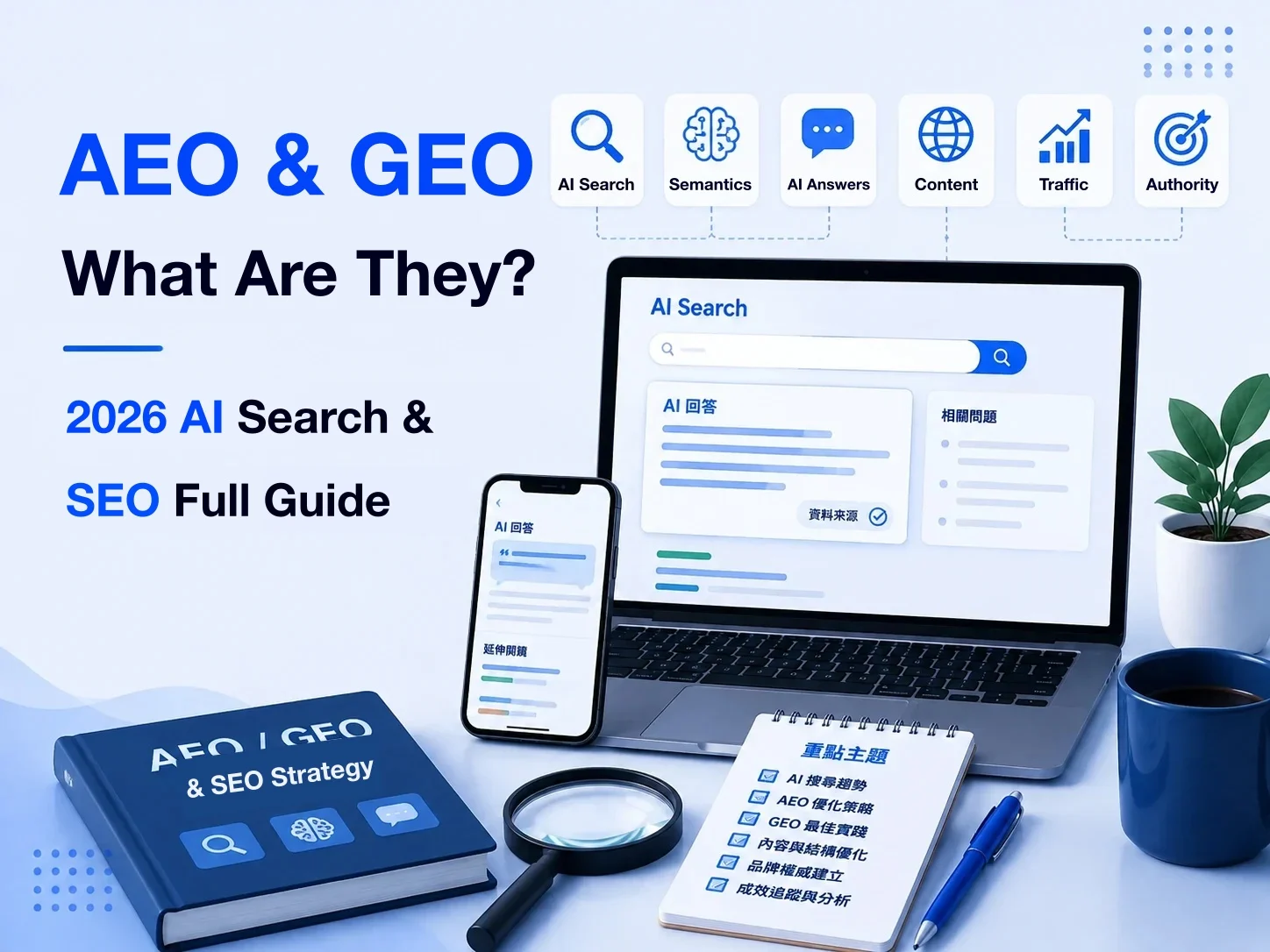
  • What are AEO and GEO? A 2026 guide to AI search and SEO for businesses
    SEO and digital marketing

    2026.09.03

    What are AEO and GEO? A 2026 guide to AI search and SEO for businesses

    What AEO and GEO are, how they differ from SEO, and how Google’s AI search picks…

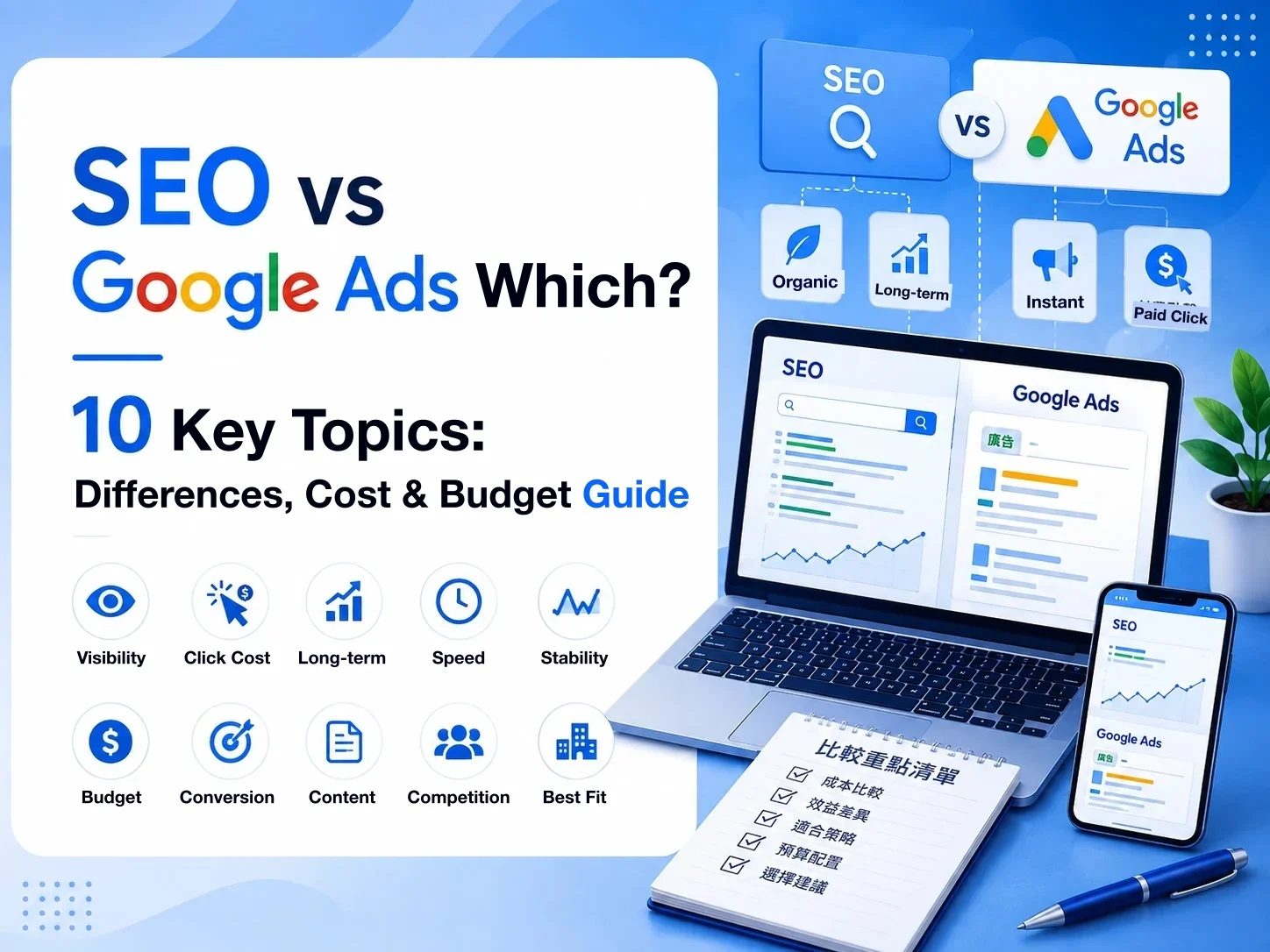
  • SEO or Google Ads? Differences, cost, and how to budget
    SEO and digital marketing

    2026.09.01

    SEO or Google Ads? Differences, cost, and how to budget

    How SEO and Google Ads differ in cost, how fast they show, and how long they las…

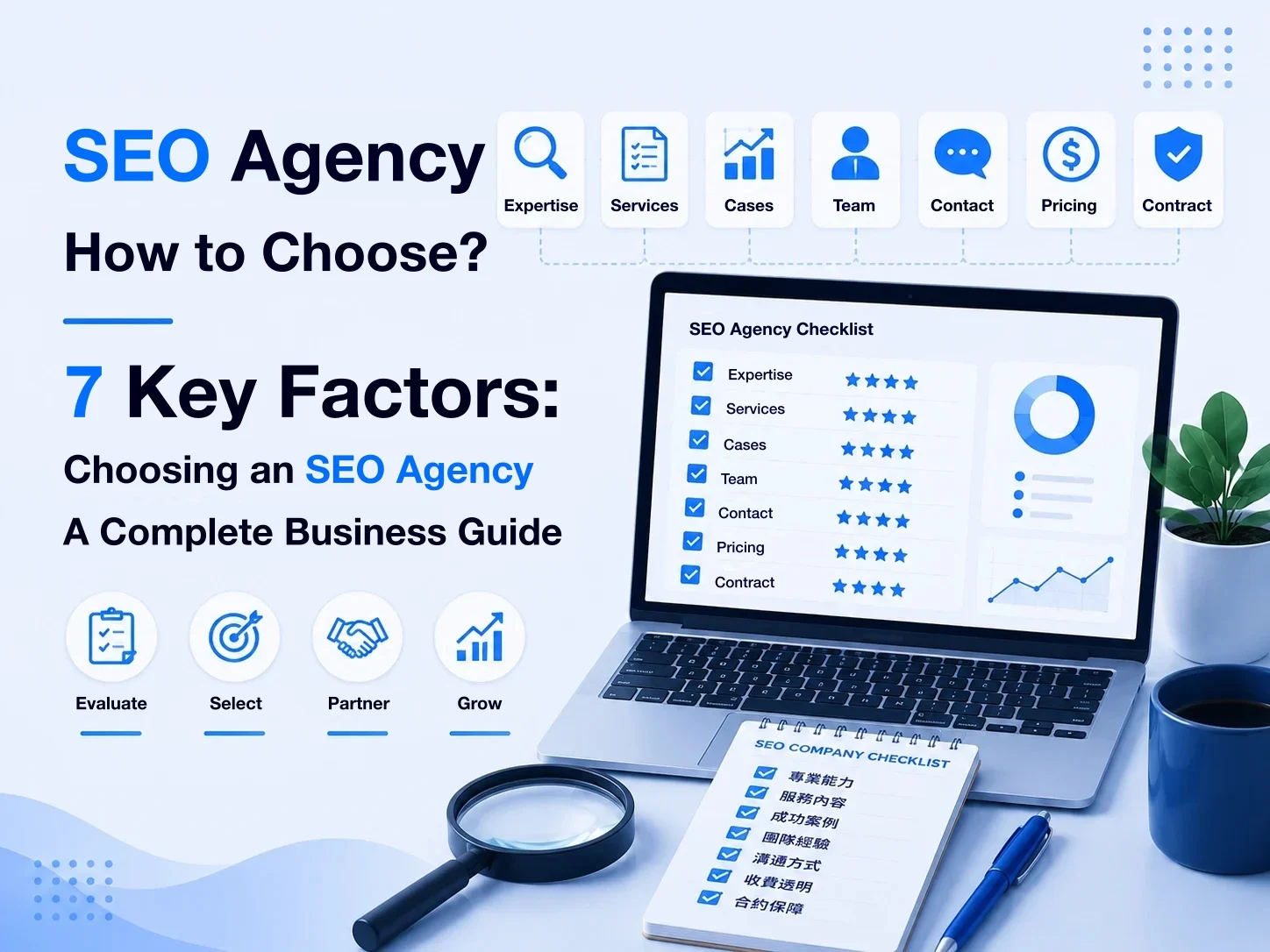
  • How to choose an SEO company: seven things a business should check
    SEO and digital marketing

    2026.08.30

    How to choose an SEO company: seven things a business should check

    SEO companies differ a lot in what they deliver, how they work, and how skilled…